Battery-powered smart locks make keyless entry practical without requiring hardwired power. This roundup compares 10 options with features such as fingerprints, palm-vein recognition, PIN codes, Wi-Fi connectivity, physical keys, and remote controls.
Before choosing, check your door compatibility, preferred access method, battery design, and whether you need app-based control or a simpler standalone lock.
Best 10 Battery Powered Smart Locks Picks for 2026
Best Wi-Fi Fingerprint Pick

- Fast fingerprint unlocking with adaptive scanning
- Up to 8 months from eight AA batteries
- Wi-Fi app control plus keypad and key backup
Best For: Homes wanting flexible biometric and remote entry
Best Budget Keypad Option

- Supports 20 user codes and one-time guest PINs
- Up to 365 days from four AA batteries
- IP54 keypad deadbolt with backup keys
Best For: Simple code-based entry for homes, rentals, and garages
Best Rechargeable Fingerprint Lock

- Six access methods, including Wi-Fi and Bluetooth
- Up to one year from a rechargeable battery
- Stores up to 100 fingerprints and scheduled guest codes
Best For: Connected homes managing residents and guests
Best Touchless Biometric Choice

- Contactless palm vein unlocking in about 0.17 seconds
- Five access methods with built-in Wi-Fi
- Dual batteries plus USB-C emergency charging
Best For: Smart homes prioritizing touchless entry and automation
Best Budget-Friendly Option

- App, keypad, and backup-key entry
- Up to 100 codes with activity tracking
- Up to one year of battery life
Best For: Families, renters, and rental properties
Best Fingerprint Smart Lock

- Six unlocking methods, including fingerprint
- Built-in Wi-Fi with no bridge required
- Around eight months of battery life
Best For: Front doors needing biometric and remote access
Best for Smart-Home Integration

- Works with Alexa, Google Home, and SmartThings
- Up to 200 codes and access timestamps
- USB-C emergency power with batteries included
Best For: Connected homes managing multiple users
Best Fingerprint Entry

- Five unlocking methods, including fingerprint
- Stores up to 50 access credentials
- Optional gateway adds remote control
Best For: Homes needing flexible keyless entry
Best Remote-Control Value

- Includes four remote controls
- Four AA batteries may last about one year
- Auto-locks three seconds after closing
Best For: Remote access without hardwired installation
Best Keypad Backup
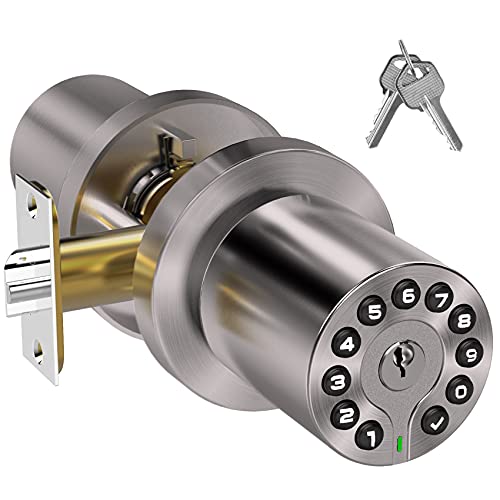
- Supports 50 user codes plus a master code
- Includes backlit keypad and auto-lock
- USB-C backup helps prevent lockouts
Best For: Bedrooms, offices, and non-deadbolt doors
Best Wi-Fi Fingerprint Pick – WYZE Auto-Lock Bolt v2
The WYZE Auto-Lock Bolt v2 is a versatile option for shoppers comparing battery powered smart locks. It combines fingerprint access, app control, keypad entry, and backup keys, while built-in Wi-Fi supports remote lock management.
Best For: Homes wanting fast biometric entry and remote access without giving up physical keys.
Pros:
- Fingerprint scanner unlocks in about 0.5 seconds and can learn from repeated use.
- Includes eight AA batteries rated for up to eight months of operation.
- Offers Wi-Fi app control, keypad access, physical keys, and USB-C emergency power.
- Has an anti-peep keypad, IP53 rating, and BHMA Grade 2 designation.
Cons:
- Uses disposable AA batteries rather than a rechargeable battery pack.
- Remote features are tied to the Wyze app and Wi-Fi connectivity.
This is a strong all-around choice if you want several entry methods and app-based control. Its emergency USB-C power option adds useful protection against lockouts when the AA batteries run down.
Best Budget Keypad Option – TEEHO TE001 Keyless Deadbolt
The TEEHO TE001 keeps battery powered smart locks simple with keypad-only access and no connectivity protocol. It supports multiple user codes, temporary entry codes, and automatic locking, making it practical for households, rentals, and secondary doors.
Best For: Buyers seeking straightforward code-based entry without app or Wi-Fi requirements.
Pros:
- Stores up to 20 individual access codes and supports a one-time guest PIN.
- Automatic locking can be set from 10 to 99 seconds, with one-touch locking available.
- Four AA batteries provide up to 365 days of operation, with a low-battery indicator.
- Includes anti-peeping code protection, IP54 weather resistance, and two backup keys.
Cons:
- Four AA batteries are not included.
- No app, Wi-Fi, or other connectivity-based remote control.
- Requires a 2-1/8-inch door hole and is not compatible with 38mm holes.
The TE001 is a good fit when dependable keypad access matters more than connected features. Confirm your door measurements before buying, and reset the lock during setup so it can detect the correct handing.
Best Rechargeable Fingerprint Lock – Tapo DL110
The Tapo DL110 stands out among battery powered smart locks with a removable rechargeable battery and six access methods. Fingerprint recognition, passcodes, Wi-Fi, Bluetooth, voice control, and backup keys give residents and guests multiple ways to enter.
Best For: Connected homes that want rechargeable power, extensive access management, and fingerprint entry.
Pros:
- Offers six entry methods, including fingerprint, passcode, Wi-Fi, Bluetooth, voice, and keys.
- Rechargeable battery is rated for up to one year, with USB-C charging.
- Recognizes fingerprints in about 0.42 seconds and stores up to 100 fingerprints.
- Supports permanent, one-time, and scheduled guest codes through the app.
Cons:
- Rechargeable operation requires periodically removing or charging the battery pack.
- Its connected and biometric features may be more than needed for a basic entry door.
Choose the DL110 if you want a feature-rich smart lock with less frequent battery maintenance than typical AA-powered models. Its broad access controls are particularly useful for managing household members and scheduled guests.
Best Touchless Biometric Choice – Veno Go Palm Vein Lock
The Veno Go brings palm vein recognition to the battery powered smart locks category for contactless entry. It also includes PIN, app, voice assistant, and mechanical-key access, plus built-in Wi-Fi for remote control without an additional hub.
Best For: Smart-home users who want touchless biometric access and multiple backup entry methods.
Pros:
- Palm vein recognition is designed for 0.17-second unlocking and works with wet or worn hands.
- Provides five unlock methods, including palm vein, PIN, app, voice, and mechanical key.
- Built-in Wi-Fi supports smart-home integration without a separate hub.
- Uses dual batteries, offers USB-C emergency charging, and has IP53 weather resistance.
Cons:
- Its palm-vein biometric system may be unnecessary for shoppers who prefer a basic keypad.
- The supplied notes give differing battery-life figures, listing up to seven months and a 14-month highlight.
- It carries a BHMA Grade 3 designation rather than the higher grade listed for some alternatives.
Veno Go is the most distinctive option here for contactless access and smart-home automation. Its dual-battery design and emergency charging support are useful additions, though buyers should verify expected runtime for their installation.
Best Budget-Friendly Option – TEEHO TE019 Keypad Lock
The TEEHO TE019 is a practical choice for shoppers comparing battery powered smart locks with keypad access and a traditional handle. It supports app access, up to 100 passcodes, backup keys, and optional remote control when paired with the separate TEEHO G1 Gateway.
Best For: Families, renters, bedrooms, garages, and rental properties that need flexible keypad access.
Pros:
- Offers app access, up to 100 custom passcodes, and two backup keys.
- Adjustable auto-lock timing, one-touch locking, activity tracking, and temporary codes.
- IP55 weather resistance, Grade 3 certification, anti-peeping protection, and a backlit keypad.
- Fits standard doors and installs in about 10 minutes with a screwdriver.
Cons:
- Four AA batteries are required but are not included.
- Remote access, voice control, and broader smart-home features require the separately sold G1 Gateway.
With up to a year of battery life under normal use and low-battery alerts in the app, the TE019 balances basic smart access with straightforward installation. It is less suitable if built-in Wi-Fi is a priority.
Best Fingerprint Smart Lock – eufy Security C220
The eufy Security Smart Lock C220 stands out among battery powered smart locks for its fingerprint reader and built-in Wi-Fi. It provides six unlocking methods, including fingerprint, app, keypad, physical key, Apple Watch, and voice control.
Best For: Front doors where fingerprint entry and built-in remote access are more important than maximum battery life.
Pros:
- Self-learning fingerprint recognition can improve with continued use.
- Built-in Wi-Fi enables remote control without a separate bridge.
- Provides real-time notifications, event history, access management, and eufy ecosystem integration.
- Includes an alarm for unusual opening attempts and has an IP53 rating.
Cons:
- Battery life is rated at around eight months with eight AA batteries.
- Its fingerprint and Wi-Fi features may be more than needed for users who only want keypad access.
The C220 is a feature-rich deadbolt for households that want several ways to enter and manage access remotely. Its shorter stated battery life is the main tradeoff for built-in Wi-Fi and biometric entry.
Best for Smart-Home Integration – Tapo DL100 Smart Deadbolt
The Tapo DL100 is a strong option for shoppers seeking battery powered smart locks with tactile buttons, broad smart-home compatibility, and remote monitoring. It supports keypad, Bluetooth, Wi-Fi, voice, and backup-key entry.
Best For: Homes that want flexible access management and integration with Alexa, Google Home, or Samsung SmartThings.
Pros:
- Supports up to 200 customizable codes with guest and family access groups.
- Includes Wi-Fi and Bluetooth control, real-time alerts, activity timestamps, and remote locking.
- Runs up to 200 days in Wi-Fi mode or 300 days in Bluetooth mode, with four AA batteries included.
- Offers USB-C emergency power, auto-lock, a PIN attempt limiter, and IP54 weather resistance.
Cons:
- Battery life varies substantially depending on whether Wi-Fi or Bluetooth mode is used.
- Voice unlocking requires a PIN verification step.
The DL100 combines useful access controls with a durable Grade 3 deadbolt design and standard installation compatibility. It is a particularly practical fit for connected homes, although Bluetooth mode offers the longer stated battery runtime.
Best Fingerprint Entry – Yamiry Keypad Smart Door Knob
For shoppers comparing battery powered smart locks, the Yamiry YR05 stands out with five entry methods: app, password, key fob, fingerprint, and physical key. Its aluminum construction, auto-lock feature, and compatibility with most American standard doors make it a versatile choice for front, back, or interior doors.
Best For: Households wanting fingerprint access and multiple keyless entry options.
Pros:
- Offers five unlocking methods, including fingerprint, app, keypad, key fob, and key.
- Stores up to 50 passwords, fingerprints, and key fobs.
- Installs with a screwdriver and includes auto-lock functionality.
- Optional Wi-Fi gateway enables remote control.
Cons:
- Remote access requires a separately sold Wi-Fi gateway.
- Bluetooth is the included connectivity protocol, rather than built-in Wi-Fi.
The Yamiry is a strong fit when flexible access matters more than built-in remote connectivity. Buyers should account for the additional gateway cost if they want to operate the lock away from home.
Best Remote-Control Value – Wireless Electronic Deadbolt
Among battery powered smart locks, this electronic deadbolt is designed for straightforward remote operation without hardwiring. It uses four AA batteries, supports remote and key unlocking, and automatically locks three seconds after the door closes, making it suitable for home, office, hotel, and garage applications.
Best For: Users who prefer remote-control access and long battery life over app-based features.
Pros:
- Includes four remote controls for shared access.
- Four AA batteries are rated for about one year of operation.
- Auto-locks three seconds after the door closes.
- Stainless-steel locking components and anti-rust battery box support durability.
Cons:
- Batteries are not included.
- Remote range is limited to 0–10 meters.
- Does not list app, fingerprint, or keypad entry.
This lock is best viewed as a dedicated remote-access deadbolt rather than a connected smart-home device. Its included remotes and low-power design are practical, but the short operating range may limit convenience in larger properties.
Best Keypad Backup – Code Entry Door Knob
This keypad door knob is a practical option for shoppers seeking battery powered smart locks with simple code access. It supports one master code and up to 50 user codes, while the traditional key, backlit keypad, auto-lock, and USB-C emergency backup add everyday convenience.
Best For: Bedrooms, offices, rentals, and other doors needing code access without a deadbolt.
Pros:
- Supports one master code and 50 user codes.
- Backlit keypad works in darkness and includes a low-battery alarm.
- USB-C backup can provide access if the batteries run out.
- Fits 1-3/8-inch to 2-1/2-inch doors and installs with a screwdriver.
Cons:
- It is a door knob lock, not a deadbolt.
- The supplied notes do not specify app or remote control.
- Battery type and expected battery life are not listed.
The YJ20 prioritizes easy code management and practical backup access. Its adjustable fit and IP65 weather resistance broaden its use, but buyers seeking remote monitoring or smart-home integration should consider a more connected model.
How We Picked the Best Battery Powered Smart Locks
We selected locks across several common use cases, including front doors, bedrooms, offices, garages, and rental properties. Our comparison emphasizes access flexibility, battery configuration, installation style, security features, weather suitability, and everyday convenience. Models with fingerprints, palm-vein scanning, keypads, remote controls, or smartphone connectivity are included so shoppers can match the lock to their routines.
Because specifications and compatibility can vary by version, confirm the current manufacturer details before buying. Pay particular attention to door thickness, backset measurements, required bore-hole dimensions, app requirements, and whether the lock supports your preferred Wi-Fi or Bluetooth setup.
Quick Comparison
| Feature | What to look for |
|---|---|
| Access methods | PIN keypad, fingerprint, palm vein, app, key, or remote control |
| Connectivity | Standalone operation, Bluetooth, Wi-Fi, or a required bridge |
| Power | Standard replaceable batteries, dual-battery design, and emergency power options |
| Lock style | Deadbolt replacement or complete knob-and-handle assembly |
| Best fit | Homes, rentals, offices, bedrooms, garages, and guest access |
Key Buying Factors for Battery-Powered Smart Locks
Door and Installation Compatibility
Measure the door thickness, backset, bore hole, and space around the deadbolt before ordering. A deadbolt model may not replace a knob lock, while a keypad handle may require removing the entire existing handle set. Exterior locks should also be rated for the conditions where they will be installed.
Access Methods and User Management
Keypads are useful for family members, guests, cleaners, and service providers because codes can be shared without handing out keys. Fingerprint readers offer fast personal access, while app-connected locks are better when you need remote locking, activity alerts, or temporary digital permissions. Keep a physical key or emergency method available when possible.
Battery Life and Backup Entry
Battery life depends on usage, temperature, connectivity, and the lock’s motor. Choose a model with clear low-battery warnings and a practical emergency power option, such as an external USB connection or mechanical keyway. Locks that rely on Wi-Fi may require more maintenance than simple keypad models.
Security and Convenience
Look for automatic locking, one-touch locking, tamper alarms, failed-entry limits, privacy functions, and encrypted app communication where applicable. Automatic locking is convenient, but set the delay carefully so you do not accidentally lock yourself out.
Who Should Buy Which Battery Powered Smart Locks?
Choose a fingerprint lock if fast, key-free entry is your priority. A keypad deadbolt is a strong general-purpose choice for households and rental access. Select a Wi-Fi model if remote monitoring and control matter most. Locks with physical keys or remote controls suit buyers who want familiar backup access, while keypad knob models are often better for interior rooms, offices, and lighter-duty installations. For any exterior installation, prioritize verified weather resistance, dependable battery warnings, and compatibility with your existing door hardware.

