A dependable emergency radio can keep you informed when storms, outages, or weak cell service disrupt normal communication. The best models combine NOAA weather alerts with multiple backup power options, useful lighting, and simple controls.
We compared 10 emergency radios under $100 across charging flexibility, battery capacity, reception, portability, and emergency features to help you choose a practical fit for home preparedness, camping, or an evacuation kit.
Best 10 Emergency Radios Under 100 Picks for 2026
Best All-Around Pick
Midland ER310 Emergency Weather Radio

- AM/FM with NOAA weather scan and alert
- Solar power plus included AA batteries
- Flashlight, USB connectivity, and dog whistle
Best For: Storm kits and general emergency preparedness
Best Feature-Rich Radio
PRUNUS J-135 Solar Bluetooth Radio
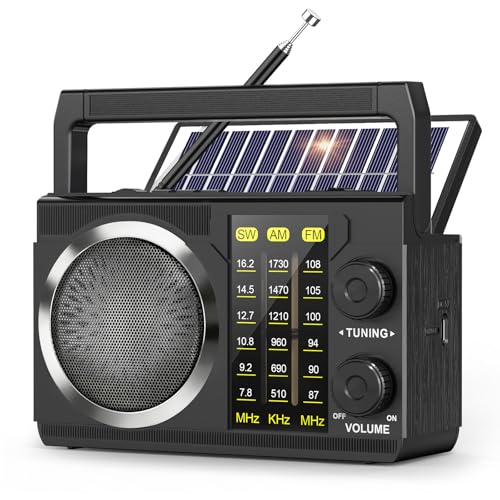
- AM/FM/SW reception with long telescopic antenna
- Rechargeable, solar, corded, and AA power
- Bluetooth, USB/TF playback, and flashlight
Best For: Portable entertainment and outage preparedness
Best Power Bank Option
FosPower A1 NOAA Emergency Radio

- 2,000mAh power bank for small devices
- Solar, hand-crank, and AAA-battery power
- NOAA access, flashlight, reading lights, and SOS alarm
Best For: Emergency kits needing backup device charging
Best Compact Budget Pick
PRUNUS J-161 NOAA Weather Radio

- Tiny 3.84-ounce battery-powered design
- AM/FM and seven NOAA weather bands
- Simple controls with headphone jack and lanyard
Best For: Compact emergency kits and straightforward weather updates
Best Compact Pick
Portable Solar and Hand-Crank Emergency Radio

- AM, FM, and weather-band reception
- Solar, hand-crank, and USB-C charging
- LED flashlight and SOS alarm
Best For: Portable emergency kits and outdoor trips
Best for Local Alerts

- S.A.M.E. county-level alert programming
- 80+ alerts with three notification modes
- Plug-in and AA battery operation
Best For: Home weather monitoring and family preparedness
Best High-Capacity Option
Rugged 12000mAh Emergency Weather Radio

- Stated 12,000mAh battery and phone charging
- Solar, hand-crank, USB-C, and AAA power options
- IPX6 waterproofing with dual emergency lights
Best For: Blackouts, storms, and rugged outdoor preparedness
Best with Extra Features

- All seven NOAA weather frequencies
- AM/FM radio with LED flashlight
- Lightweight 2.4-ounce portable design
Best For: Simple emergency kits, travel, and everyday portable listening
Best Value Power Backup

- 2,000mAh battery with solar, crank, and USB-C charging
- NOAA alerts and AM/FM broadcasts
- LED light, SOS beacon, and splash protection
Best For: Home outage kits and outdoor trips needing flexible backup power
Best Feature-Rich Pick
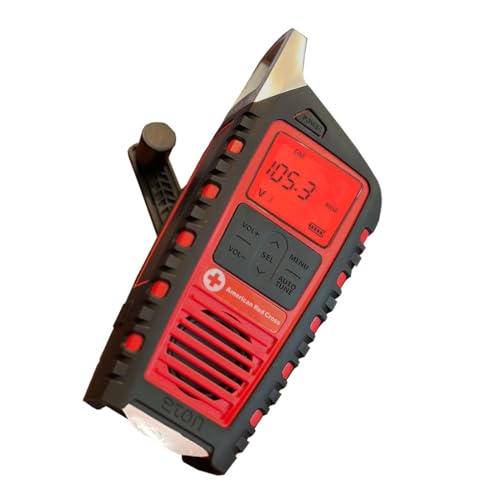
- AM/FM, shortwave, and NOAA reception with RDS
- Solar and hand-crank charging with 2,000mAh battery
- Bluetooth, USB charging, flashlight, and SOS alarm
Best For: Camping, extended outages, and comprehensive preparedness kits
Best All-Around Pick – Midland ER310 Emergency Weather Radio
If you want one of the more versatile emergency radios under 100, the Midland ER310 combines AM/FM and NOAA weather scanning with several backup-power options. It also adds a flashlight and ultrasonic dog whistle for practical emergency use.
Best For: Emergency kits, storm preparedness, and outdoor activities where multiple power options are useful.
Pros:
- Supports solar power and included AA batteries.
- NOAA weather scan and alert capability helps deliver emergency information.
- Built-in flashlight and ultrasonic dog whistle add preparedness features.
- USB connectivity supports compatible smartphones and tablets.
Cons:
- It is not water resistant.
- Its 9.61-inch length is larger than some compact emergency radios.
The ER310 is a well-rounded choice if you want weather alerts, basic radio reception, lighting, and flexible power in one unit. Its lack of water resistance means it is best protected from rain and splashes.
Best Feature-Rich Radio – PRUNUS J-135 Solar Bluetooth Radio
The PRUNUS J-135 stands out among emergency radios under 100 for combining AM/FM/SW reception with Bluetooth, rechargeable USB-C power, solar charging, and AA-battery backup. It is designed for both outage readiness and everyday portable listening.
Best For: Buyers who want an emergency radio that also works as a Bluetooth speaker and media player.
Pros:
- Offers rechargeable, solar, corded, and AA-battery power options.
- Receives AM, FM, and shortwave broadcasts.
- Bluetooth 6.0, TF card, and USB-drive playback support flexible listening.
- Built-in flashlight and compact handled design improve portability.
Cons:
- The four AA batteries are not included.
- Its many playback and power features may be more than needed for a basic emergency kit.
Choose the J-135 if versatility matters as much as emergency readiness. Its 1,800mAh rechargeable battery and solar panel help reduce reliance on outlets, while the extra playback options make it useful outside emergencies.
Best Power Bank Option – FosPower A1 NOAA Emergency Radio
For shoppers comparing emergency radios under 100, the FosPower A1 offers useful power and lighting features in a compact package. Its 2,000mAh power bank can help recharge a small phone or tablet, while solar and hand-crank charging provide alternatives when outlets are unavailable.
Best For: Emergency kits that need device charging, weather broadcasts, and multiple light sources.
Pros:
- Includes a 2,000mAh power bank for compatible small devices.
- Uses solar, hand-crank, and AAA-battery power sources.
- Receives AM/FM and NOAA weather broadcasts.
- Combines a 1W flashlight with four LED reading lights and an SOS alarm.
Cons:
- Requires four AAA batteries, which are not stated as included.
- The power bank is intended for small devices rather than high-power electronics.
The A1 is a strong fit when keeping phones powered is a priority. Its water-resistant design and limited lifetime warranty add reassurance for emergency and outdoor use, though the charging capacity remains modest.
Best Compact Budget Pick – PRUNUS J-161 NOAA Weather Radio
The PRUNUS J-161 is a simple, lightweight choice among emergency radios under 100. It runs on two AA batteries, receives AM/FM and seven NOAA weather bands, and uses straightforward physical controls that are easy to operate during a power outage.
Best For: Small emergency kits, older users, and anyone who prefers a basic battery-powered weather radio.
Pros:
- Compact 4.7-by-2.8-by-1.2-inch design weighs 3.84 ounces without batteries.
- Receives AM, FM, and seven NOAA weather bands.
- Simple power, tuning, and band-selection controls.
- Includes a headphone jack and handy lanyard.
Cons:
- It does not provide automatic NOAA alert notifications.
- It relies only on two AA batteries, with no solar or hand-crank charging listed.
- The supplied details list the tuner type as FM despite describing AM and NOAA reception.
The J-161 keeps the focus on portability and essential weather information. It is a practical grab-and-go radio if you already keep spare AA batteries available and do not need charging or lighting features.
Best Compact Pick – Portable Solar and Hand-Crank Emergency Radio
For shoppers comparing emergency radios under 100, this compact Pomya model covers the core preparedness features without taking up much space. It receives AM, FM, and weather-band broadcasts and offers solar, hand-crank, and USB-C charging, making it a practical option for camping, hiking, or a household emergency kit.
Best For: Buyers who want a lightweight, multipurpose emergency radio with several charging options.
Pros:
- Supports AM, FM, and weather-band reception with an adjustable antenna.
- Offers solar, hand-crank, and USB-C charging with a built-in 2,000mAh battery.
- Includes a bright LED flashlight and loud SOS alarm.
- Compact body, carrying strap, and battery-level indicator improve portability and convenience.
Cons:
- The 2,000mAh battery is smaller than the capacity offered by some larger emergency radios.
- The listed warranty is limited to 90 days.
This is a straightforward choice for basic communication, lighting, and backup power needs. Its small size and multiple charging methods are especially useful when portability matters more than maximum battery capacity.
Best for Local Alerts – DreamSky NOAA Weather Radio
Among emergency radios under 100, the DreamSky stands out for home users who prioritize targeted weather notifications. Its S.A.M.E. programming is designed to focus alerts on selected counties, while the plug-in and battery-powered design helps maintain access to FM broadcasts and warnings during outages.
Best For: Families and households that want localized NOAA alerts in an everyday bedside or countertop radio.
Pros:
- Supports S.A.M.E. localized programming with 23 customizable county codes.
- Provides more than 80 alert events with voice, tone, and display modes.
- Works from wall power or three AA batteries, though batteries are not included.
- Includes an FM radio, alarm clock, snooze function, and adjustable LCD backlight.
Cons:
- It does not list solar or hand-crank charging.
- Three AA batteries are required for battery operation and are sold separately.
- Its desk-oriented design may be less convenient for hiking or mobile outdoor use.
The DreamSky is better suited to a home alert station than a rugged grab-and-go radio. Its localized alert features and daily alarm-clock functions give it practical value even when there is no active emergency.
Best High-Capacity Option – Rugged 12000mAh Emergency Weather Radio
For shoppers seeking emergency radios under 100 with more built-in power, this Roxicosly model combines a stated 12,000mAh battery with solar, hand-crank, USB-C, and AAA-battery options. It also adds waterproof construction, NOAA alerts, dual lighting, and phone charging for more demanding blackout and outdoor scenarios.
Best For: Users who want a rugged emergency radio with substantial backup power, lighting, and weather-alert features.
Pros:
- Features a stated 12,000mAh battery for powering the radio, lights, and USB devices.
- Uses a large monocrystalline solar panel and an efficient hand-crank generator.
- Includes a 5W adjustable flashlight and a 12-LED reading lamp.
- Offers AM/FM/NOAA reception, automatic alerts, an SOS alarm, and IPX6 waterproofing.
Cons:
- At 824g, it is heavier than compact emergency-radio options.
- The larger body may be less convenient for lightweight day hikes.
- Its extensive feature set may be more than basic emergency kits require.
This is the most equipment-focused option in the group. Choose it when phone charging, brighter lighting, water resistance, and a larger battery are more important than minimizing size and weight.
Best with Extra Features – JENSEN JEP-100 Weather Radio
If you want one of the simplest emergency radios under 100, the JENSEN JEP-100 focuses on core essentials: AM/FM listening, all seven NOAA weather frequencies, and a built-in flashlight. Its compact design fits easily in an emergency kit, glove compartment, or backpack.
Best For: Buyers who want a lightweight weather radio for basic alerts, news, music, and occasional emergency lighting.
Pros:
- Receives all seven NOAA weather band frequencies.
- Includes AM/FM tuning and a built-in white LED flashlight.
- Compact 2.4-ounce design has a telescopic antenna and hand strap.
- Offers both a built-in speaker and headphone jack.
Cons:
- Requires two AAA batteries rather than offering crank or solar charging.
- Not water resistant.
- Does not include a phone-charging function or SOS alarm.
The JEP-100 is a straightforward choice when portability and basic broadcast access matter more than backup power features. It is especially practical for a household or travel kit that already includes spare batteries.
Best Value Power Backup – LiebeWH Hand Crank Radio
The LiebeWH hand crank radio is a versatile option among emergency radios under 100, combining NOAA and AM/FM broadcasts with several ways to maintain power. Its 2,000mAh battery, solar panel, hand crank, and USB-C charging support make it useful during outages and outdoor trips.
Best For: Shoppers seeking a budget-friendly emergency radio with backup charging, lighting, and signaling features.
Pros:
- Supports hand-crank, solar, and USB-C charging.
- Includes a 2,000mAh battery for charging devices.
- Provides NOAA alerts plus AM/FM broadcasts.
- Offers a multi-mode LED light, SOS beacon, loud alarm, and splash protection.
Cons:
- The supplied details do not specify the exact NOAA frequency range or radio-band coverage beyond the listed AM range.
- Its 90-day manufacturer warranty is relatively short.
- At nearly 6 by 4.33 by 1.96 inches, it is less pocket-sized than a basic radio.
With multiple charging methods and several emergency-oriented functions, this model offers more preparedness capability than a battery-only portable radio. It is a sensible fit for home emergency storage, camping, or hiking.
Best Feature-Rich Pick – Eton Odyssey Adventure Radio
The Eton Odyssey Adventure packs broad reception and several preparedness tools into a rugged portable radio. For shoppers comparing emergency radios under 100, it stands out with AM, FM, shortwave, and NOAA bands, plus solar and hand-crank charging, Bluetooth, a phone-charging USB output, and a multi-setting flashlight.
Best For: Outdoor users and preparedness-minded buyers who want one radio for alerts, entertainment, lighting, and device charging.
Pros:
- Receives AM, FM, shortwave, and NOAA broadcasts with RDS.
- Offers solar and hand-crank charging for its rechargeable 2,000mAh battery.
- Includes a three-LED flashlight with high, low, and flood settings plus SOS alarm.
- Adds Bluetooth, a backlit LCD clock display, and USB phone charging.
Cons:
- At 1.2 pounds, it is considerably heavier than a basic compact radio.
- Its IPX4 rubberized enclosure is water resistant rather than fully waterproof.
- The feature-rich design may be more than users need for simple AM/FM listening.
The Odyssey is the most comprehensive option in this group for off-grid use, particularly when broad radio coverage and rechargeable power are priorities. Its added connectivity and lighting features also make it useful for camping and extended outages.
How We Picked the Best Emergency Radios Under 100
We focused on features that matter when regular power and communication are unavailable: NOAA weather reception, AM/FM coverage, hand-crank and solar charging, replaceable or rechargeable batteries, USB phone charging, flashlights, and SOS functions. We also considered portability, control simplicity, advertised battery capacity, and whether each radio suits occasional backup use or more demanding outdoor situations.
Because product specifications and performance can vary, treat solar charging as a backup rather than a primary power source. A hand crank is most useful when you need an immediate power boost, while batteries or a built-in rechargeable cell are better for sustained listening.
Quick Comparison
- Best all-around preparedness: Look for NOAA alerts, multiple charging methods, a strong built-in battery, and a clear flashlight.
- Best compact option: Choose a smaller AM/FM weather-band radio with simple controls and replaceable batteries.
- Best for phone charging: Prioritize higher-capacity batteries and a clearly specified USB output.
- Best for outdoor use: Consider portability, durable construction, SOS signaling, and shortwave or Bluetooth support.
- Best for long outages: Select a model with several power options rather than relying only on solar charging.
Key Buying Factors for Emergency Radios Under $100
Weather Alerts and Reception
NOAA weather-band support is more important than having many extra features. An alert function can provide warnings without requiring you to monitor the radio constantly. AM/FM reception is useful for local updates, while shortwave can broaden coverage in some locations.
Power and Charging Options
Compare built-in battery size, AA or AAA compatibility, USB-C or micro-USB input, solar charging, and hand-crank operation. Replaceable batteries are valuable during extended outages because they can be stored separately and swapped quickly.
Emergency Features
A bright flashlight, reading lamp, SOS alarm, and phone-charging output can make a radio more useful, but they also drain power. Check whether the controls are easy to use in darkness and whether the charging ports match your devices.
Size and Ease of Use
A compact radio is easier to keep in a go-bag, while a larger unit may provide a bigger battery, speaker, or solar panel. Favor readable tuning indicators, dependable knobs or buttons, and a design that does not require an app or complicated setup.
Who Should Buy Which Emergency Radios Under 100?
Home emergency planners should choose a multi-power model with NOAA alerts, a substantial battery, and phone charging. Campers and hikers may prefer a lighter radio with a flashlight, SOS alarm, and durable hand-crank or solar capability. Budget-focused buyers can save by choosing a straightforward AM/FM weather radio that uses replaceable batteries. Frequent travelers should prioritize compact dimensions, USB-C compatibility, and controls that are quick to operate.
Before an emergency, test the radio, charge its battery, store spare batteries where appropriate, and confirm that it can receive local weather broadcasts. The best choice among these Emergency Radios Under 100 is the one you will keep accessible, understand how to operate, and maintain before the next outage.

