Healthy indoor plants need more than a bright windowsill. The right grow light can provide consistent, usable illumination for seedlings, herbs, foliage plants, and flowering varieties throughout the year.
These 10 grow lights cover a range of spaces and budgets, including clip-on lamps, adjustable vertical fixtures, bulb-style replacements, under-cabinet bars, and higher-output panels. Use the guide below to match light coverage, controls, installation, and power needs to your plants.
Best 10 Grow Lights Picks for 2026
Best Adjustable Clip-On Grow Lights
168-LED Full-Spectrum Plant Lights
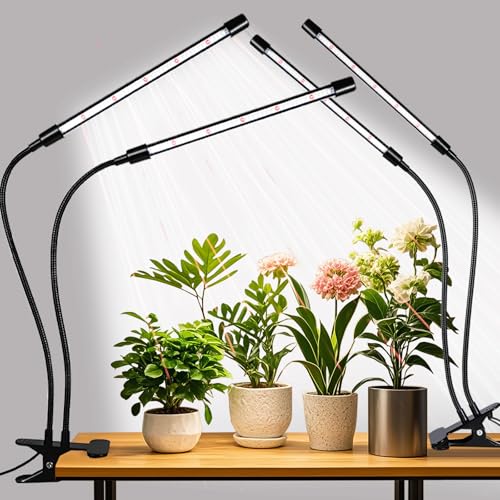
- Two clip-on bars with flexible goosenecks
- Three modes and 10 brightness levels
- 3/9/12-hour cycle-memory timer
Best For: Small indoor plant collections needing targeted, adjustable light
Best Freestanding Grow Light
Barrina T10 Pro Vertical Plant Light

- 42-watt full-spectrum vertical light
- Adjusts from 4 to 5.6 feet
- Includes a mechanical timer
Best For: Tall plants and large indoor plant shelves
Best High-PPFD Grow Light Bulb

- 36-watt 4000K full-spectrum output
- Optical lens for stated high PPFD
- E26 base with ceramic heat management
Best For: Existing E26 fixtures needing stronger supplemental light
Best Easy-Install Grow Light Bulbs

- Two standard E26 LED bulbs
- Natural-looking white full-spectrum light
- Up to 1,000 lumens per bulb
Best For: Beginners using existing indoor light fixtures
Best Full-Length Coverage
Barrina 4FT Full-Spectrum Grow Lights

- Six 4-foot 5000K full-spectrum LED bars
- Linkable design with installation accessories
- Aluminum housing and V-shaped reflectors
Best For: Large indoor plant shelves, tents, and greenhouse-style setups
Best Adjustable Multi-Plant Lamp
LEOTER 80-LED Gooseneck Grow Light
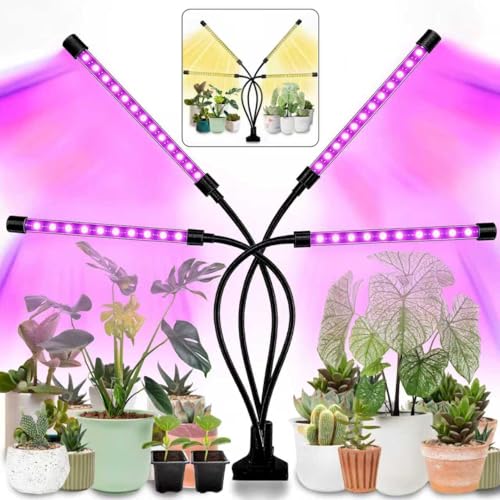
- Four flexible heads with a clamp mount
- Three spectrum modes and 10 brightness levels
- Automatic 3-, 9-, or 12-hour timer
Best For: Small indoor plant collections and adjustable desk or shelf lighting
Best Low-Power Clip-On
6000K Full-Spectrum Plant Lamp

- 6000K light with white and red LEDs
- 50%/100% dimming and three timer cycles
- Flexible gooseneck with a strong clamp
Best For: Small plants, herbs, microgreens, and countertop gardens
Best for Modular Shelving
Barrina T5 Full-Spectrum Grow Lights

- Four 1-foot 5000K full-spectrum fixtures
- Individual switches for flexible control
- Includes mounting hardware and linking cords
Best For: Compact shelves, seedlings, and multi-section plant setups
Best High-Output Panel
VIVOSUN LumaLight 100W LED Grow Light
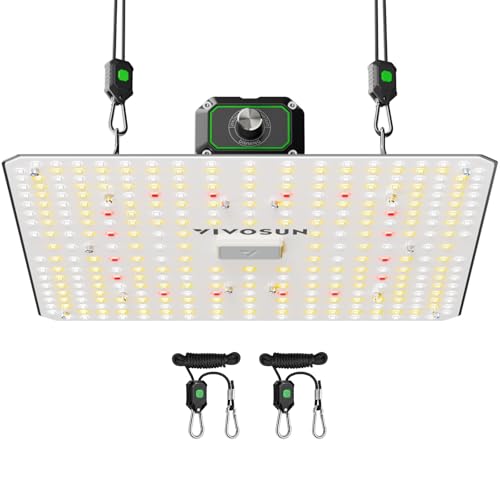
- 100W full-spectrum LED panel
- Dimming from 25% to 100%
- IP65 waterproof and dustproof design
Best For: Dedicated indoor growing areas needing strong, even illumination
Best for Small Houseplants

- Three lighting modes and 10 brightness levels
- Automatic 3-, 9-, or 12-hour timer cycles
- Adjustable pole reaches up to 26 inches
Best For: Small indoor plants and decorative floor-planter setups
Best Adjustable Clip-On Grow Lights – 168-LED Full-Spectrum Plant Lights
These grow lights are a flexible option for shelves, countertops, and small indoor gardens. The two clip-on bars provide full-spectrum white and red lighting, with adjustable brightness and several timing settings for different plant-growth stages.
Best For: Indoor gardeners who need flexible, targeted lighting for multiple small plants.
Pros:
- Two lights with 360-degree goosenecks and four LED heads for flexible positioning.
- Three spectral modes and 10 dimming levels accommodate different growth stages.
- Cycle-memory timer offers automatic 3-, 9-, or 12-hour daily schedules.
- Full-spectrum white and red LEDs support vegetative growth, flowering, and fruiting.
Cons:
- At 8 watts, these lights are better suited to targeted supplemental lighting than broad, high-intensity coverage.
- The lights are not waterproof and are intended for indoor use.
- They require a USB connection and corded power.
This two-pack stands out when positioning flexibility matters more than a freestanding design. The clips, adjustable necks, dimming, and timer make it easy to tailor light placement around compact plant collections.
Best Freestanding Grow Light – Barrina T10 Pro Vertical Plant Light
The Barrina T10 Pro is a freestanding grow light designed to illuminate taller plants and larger shelves. Its 42-watt full-spectrum output, vertical format, and adjustable 4- to 5.6-foot height provide broad coverage without requiring a tabletop clip or hanging installation.
Best For: Tall houseplants, large plant shelves, and indoor gardeners who prefer a floor-standing setup.
Pros:
- Adjustable height from 4 to 5.6 feet suits tall plants and larger displays.
- 42 watts and up to 169 LEDs provide high-output full-spectrum lighting.
- 660nm red wavelength chips support plants across different growth stages.
- Includes a mechanical timer and tool-free assembly design.
Cons:
- The freestanding design occupies floor space and is less portable than a clip-on light.
- It is not water resistant and is intended for indoor use only.
- Its mechanical timer may be less convenient than app-based controls.
Choose this model when coverage and height are priorities. The upright form and adjustable extension rods make it a practical match for large indoor plants such as monsteras, money trees, and orchids.
Best High-PPFD Grow Light Bulb – SANSI 36W Full-Spectrum BR30
The SANSI 36W is a BR30 grow light bulb for indoor gardeners who already have a compatible E26 fixture. It produces 4000K daylight with a full visible spectrum, while its optical lens, ceramic construction, and low-heat design are intended to support efficient and reliable plant lighting.
Best For: Growers who want a high-output bulb for an existing E26 lamp or fixture.
Pros:
- 36-watt full-spectrum 4000K light covers the visible spectrum from 400nm to 780nm.
- Optical lens design provides a stated PPFD of 265.58 μmol/s/m² at 1 foot.
- Ceramic COC technology supports heat conduction and a stated 25,000-hour lifespan.
- ETL listed with a five-year protection plan.
Cons:
- It is a single bulb, so coverage depends on the fixture and placement used.
- It requires an E26 socket and an AC power source.
- The bulb does not include a dedicated timer or adjustable mounting system.
This is a strong bulb-style choice for gardeners who want substantial supplemental light without replacing an existing fixture. Its natural-looking 4000K output also integrates more comfortably into living spaces than purple-tinted grow bulbs.
Best Easy-Install Grow Light Bulbs – A19 Full-Spectrum E26 Bulbs
These A19 grow light bulbs offer a simple way to add plant lighting to standard E26 fixtures. The two-pack produces natural-looking white light, delivers up to 1,000 lumens per bulb, and uses 11 watts while providing a balanced spectrum for vegetables, herbs, and other indoor plants.
Best For: Beginners who want an affordable, fixture-compatible way to add grow lights around the home.
Pros:
- Standard E26 base installs in commonly used compatible fixtures.
- Natural-looking 4000K-style white light is less harsh than purple grow bulbs.
- Two bulbs provide 180-degree coverage and up to 1,000 lumens each.
- Low-heat LED construction has a stated lifespan of up to 25,000 hours.
Cons:
- They do not include a dedicated fixture, timer, or adjustable positioning system.
- The bulbs provide less stated output than the 36-watt SANSI bulb.
- They are intended for indoor use and require compatible AC fixtures.
For straightforward installation, this two-pack is hard to complicate: screw the bulbs into compatible E26 sockets and position them near the plants. It is best suited to supplemental lighting rather than a complete setup for a large indoor garden.
Best Full-Length Coverage – Barrina 4FT Full-Spectrum Grow Lights
For shelves, grow tents, and larger indoor setups, these grow lights provide broad 5000K full-spectrum coverage in a six-light kit. The 4-foot LED bars use aluminum housings for heat dissipation and can be linked in series for a cleaner installation.
Best For: Seedlings, plant shelves, grow tents, greenhouses, and hydroponic rooms needing several linked light bars.
Pros:
- Six 4-foot, 5000K full-spectrum LED bars provide substantial coverage.
- V-shaped reflectors are designed to increase light efficiency, while the aluminum shell helps dissipate heat.
- Includes cords, connectors, clips, tape, and cable ties for flexible installation.
- Up to six light strips can be linked in series.
Cons:
- The corded, indoor-only design is less convenient for portable or outdoor use.
- The newer and older Barrina products require the correct connector cables when combined.
This is the strongest choice here for scaling up an indoor growing area, but its full-length bars and ceiling-style mounting are more setup than a single houseplant usually needs.
Best Adjustable Multi-Plant Lamp – LEOTER 80-LED Gooseneck Grow Light
This compact grow light offers four adjustable heads, three spectrum modes, and 10 brightness levels, making it easy to tailor lighting for plants at different stages. Its clamp mount and USB connectivity also suit desks, shelves, and small indoor gardens.
Best For: Small plant collections, desks, shelves, and growers who want adjustable positioning and automatic daily timing.
Pros:
- Uses 80 LEDs across red, blue, yellow, and white light sources.
- Provides full-spectrum, red/blue, and combined spectrum modes.
- Offers 10 dimming levels and a circular 3-, 9-, or 12-hour timer.
- Four flexible goosenecks and a metal clamp make positioning convenient.
Cons:
- The timer must be reset if the light loses power.
- It is not waterproof and is intended for indoor use.
- Its compact clamp-on format is better suited to smaller areas than large grow spaces.
Choose this model when flexibility matters more than maximum coverage. The independent positioning, dimming, and spectrum controls make it a practical desk or shelf light for varied houseplant needs.
Best Low-Power Clip-On – 6000K Full-Spectrum Plant Lamp
For a few pots or a countertop garden, this clip-on grow light combines 6000K white light with red LEDs, a flexible gooseneck, and a strong clamp. It draws about 10 watts and includes remote-controlled dimming and repeating timer settings.
Best For: Small houseplants, herbs, microgreens, seedlings, and countertop growing areas where low power use is important.
Pros:
- Combines 74 white LEDs with 10 red LEDs in a 6000K setup.
- Includes 50% and 100% dimming options.
- Repeating 4-, 8-, or 12-hour timer cycles reduce daily manual adjustments.
- Flexible gooseneck and clamp help direct light around multiple pots.
Cons:
- Its clip-on design is intended mainly for small or medium plant groupings.
- The light is corded and not described as waterproof.
- Only two brightness settings are available.
This is a sensible budget-conscious option for supplementing natural light around a small indoor garden. Its timer and low stated power draw make it especially convenient for routine plant care.
Best for Modular Shelving – Barrina T5 Full-Spectrum Grow Lights
If you need compact grow lights for a shelf, cabinet, or propagation setup, the Barrina T5 system offers four 1-foot fixtures with 5000K full-spectrum illumination. Each light has its own switch, and the included mounting hardware supports flexible installation.
Best For: Seedlings, vegetative plants, and flowering plants arranged on shelves or in compact indoor growing areas.
Pros:
- Four 1-foot, 5000K full-spectrum fixtures provide flexible coverage.
- Uses 20W with 96 LEDs and is designed to replace 120W general plant lights.
- Separate switches let you control fixtures individually or together.
- Included clips, tape, cable ties, and connecting cords simplify installation and linking.
Cons:
- At 1 foot long, each fixture is better suited to compact spaces than large plant areas.
- The lights are non-magnetic and should not be mounted on uncured plaster or dusty, greasy, rough surfaces.
Choose this Barrina set when modular installation and individual control matter more than a single large fixture. Its four-light format is especially practical for shelves with multiple plant sections.
Best High-Output Panel – VIVOSUN LumaLight 100W LED Grow Light
For growers seeking a more powerful set of grow lights, the VIVOSUN LumaLight combines 100W output with white, blue, red, and far-red LEDs. Its rectangular panel provides full-spectrum illumination, four-level dimming, and construction suited to humid indoor environments.
Best For: Indoor growers who want strong, evenly distributed light from seedling through harvest, with optional app-based control.
Pros:
- Full-spectrum array includes 3000K, 5000K, 660nm, and 730nm LEDs.
- Strategic diode placement is designed to provide uniform PPFD across the coverage area.
- Four-level dimming adjusts intensity from 25% to 100%.
- IP65 waterproof and dustproof construction suits high-temperature and high-humidity settings.
Cons:
- GrowHub compatibility and mobile automation require the separately sold GrowHub.
- The 100W panel and hanging installation may be more than needed for a small houseplant.
This VIVOSUN model is the stronger choice for a dedicated indoor growing area where intensity, spectrum control, and uniform coverage are priorities. Its aluminum construction and stated 36,000-hour Q90 flux maintenance add long-term appeal.
Best for Small Houseplants – Adjustable Halo Grow Light
This compact halo-style option is one of the more approachable grow lights for indoor plants, combining a base and adjustable pole with touch controls. It offers three lighting modes, 10 brightness levels, and repeatable timer cycles for everyday houseplant care.
Best For: Small indoor plants, floor planters, and decorative setups where adjustable height and simple scheduling are useful.
Pros:
- Offers white, warm white and red, and mixed lighting modes.
- Ten brightness levels provide more control over illumination.
- Three timer cycles—3, 9, or 12 hours—can repeat automatically each day.
- The pole adjusts in height, rotates 90 degrees, and can reach up to 26 inches.
Cons:
- It is corded and requires power; it is not a wireless or battery-powered light.
- The base needs to be pressed down by the flower pot for stability.
- It is not waterproof and is intended for indoor use only.
This halo light suits plant owners who want a discreet, adjustable accent light rather than a high-output growing panel. Confirm that your pot can stabilize the base and that a nearby USB power connection is available.
How We Picked These Grow Lights
We focused on practical features that matter in everyday indoor growing: spectrum claims, light coverage, output, adjustability, timers, dimming, mounting options, size, and ease of installation. The selection includes options for single plants, shelves, propagation areas, kitchens, and larger collections rather than treating every growing setup the same.
Because plant requirements vary, a higher wattage or more LEDs does not automatically make one lamp better. The best choice depends on the distance between the fixture and leaves, the area you need to illuminate, and how much control you want over brightness and scheduling.
Quick Comparison
| Setup | Best style to consider | Useful features |
|---|---|---|
| One small plant | Clip-on or base lamp | Flexible neck, compact footprint, timer |
| Several plants on a shelf | Bar or multi-pack light | Even coverage, linkable or easy mounting design |
| Tall plants | Vertical fixture | Height adjustment and broad side coverage |
| Existing lamp socket | Grow light bulb | Simple installation and familiar controls |
| High-demand plants | Higher-output panel | Greater intensity, dimming, and suitable hanging height |
Key Buying Factors for Grow Lights
Light Coverage and Intensity
Check the illuminated area, not just the advertised wattage. A narrow clip light may work well for one pot but leave surrounding plants shaded. For shelves or multiple plants, longer bars or multiple fixtures usually provide more even coverage. Keep the light close enough to deliver useful intensity without creating excessive heat or bleaching leaves.
Spectrum and Color Temperature
Full-spectrum Grow Lights are designed to support general plant growth while producing a more natural-looking white light. Red and blue supplemental LEDs can be useful, but spectrum labels alone do not reveal actual performance. Consider the fixture’s coverage, output, and intended plant type together.
Controls, Timer, and Adjustability
A built-in timer helps maintain a consistent daily schedule, while dimming and flexible necks make it easier to adapt as plants grow. If the light will be installed permanently, prioritize reliable mounting and a switch or timer that remains accessible.
Heat, Power, and Installation
Look for a fixture that fits your available outlet, shelf, or socket. Higher-output models can use more electricity and may need more clearance. Measure the space before buying, especially for four-foot bars and vertical lights.
Who Should Buy Which Grow Lights?
Choose a clip-on or base-style lamp for a single houseplant, a small propagation tray, or a desk setup. Bulb-style lights make sense when you already have a compatible fixture and want the simplest upgrade. Bar lights are better for plant shelves, cabinets, and rows of herbs because they spread illumination across a longer area.
For tall plants or mixed-height collections, an adjustable vertical light offers more flexible positioning. Choose a higher-output panel when you are growing several light-hungry plants or need stronger coverage over a defined area. Whichever style you select, follow the manufacturer’s recommended distance and schedule, then watch the leaves for signs that the light needs adjustment.

