Smart plugs without a hub make it easy to automate lamps, fans, coffee makers, and other compatible devices using your existing Wi-Fi network. The best options combine reliable connections with useful app controls and broad voice-assistant support.
This roundup compares 10 leading models, including compact single plugs, multipacks, energy-monitoring options, and a Matter-supported choice for more flexible smart-home compatibility.
Best 10 Smart Plugs Without a Hub Picks for 2026
Best Alexa Pick
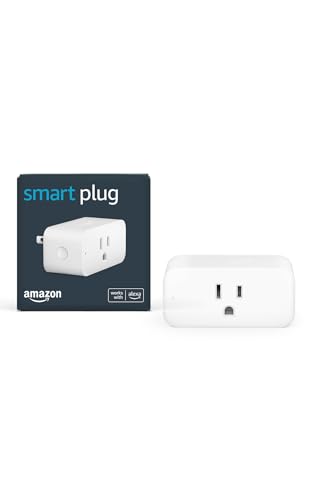
- No hub required and managed in the Alexa app
- Compact design keeps the second outlet free
- Supports voice control, routines, and reconnection after outages
Best For: Alexa households seeking simple automation
Best Value 2-Pack
Kasa Smart Plug Ultra Mini EP10P2

- Two Wi-Fi plugs support Alexa and Google Assistant
- Remote control and scheduling through the Kasa app
- 15A rating with UL certification and a two-year warranty
Best For: Multi-room control with assistant flexibility
Best Alexa 4-Pack

- Four compact plugs automate multiple appliances
- No hub or third-party app required
- Supports Alexa routines, schedules, and remote control
Best For: Expanding an Alexa-only smart home
Best Energy Tracking

- Tracks usage with statistics and intuitive charts
- Supports scheduling, smart charging, and auto-shutoff
- Works with Alexa, Google Assistant, and SmartThings
Best For: Monitoring and managing energy across multiple devices
Best Value Multi-Pack

- Four-plug package for multiple rooms
- Alexa and Google Assistant compatible
- Grouping, schedules, and remote app control
Best For: Automating several devices throughout a home
Best High-Power Option
EIGHTREE 15A Smart Plug 4-Pack
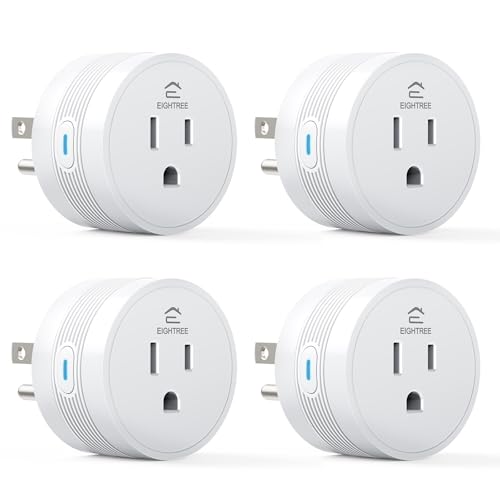
- 15A design marketed for up to 1800W
- Alexa, Google Home, and SmartThings support
- Compact design with schedules and grouping
Best For: Higher-power appliances and compact outlet setups
Best Budget Pick

- App, voice, timer, and schedule control
- Works with Alexa and Google Assistant
- 2.4GHz Wi-Fi with Bluetooth pairing support
Best For: Budget-friendly everyday appliance control
Best Matter Option
TP-Link Tapo Matter Smart Plug

- Matter compatibility across major platforms
- Local control can work during internet outages
- Compact 15A/1,800W three-pack
Best For: Multi-platform smart homes and multi-room setups
Best Multi-Pack

- Four compact plugs in one package
- Schedules, grouping, and family sharing
- Alexa and Google Assistant compatible
Best For: Automating several everyday devices at once
Best Alexa Pick – Amazon Smart Plug
If you want smart plugs without a hub, this Amazon Smart Plug is a straightforward choice for Alexa households. Setup runs through the Alexa app, and the plug can automate compatible lamps, fans, coffee makers, and other devices with a physical on/off switch.
Best For: Alexa users who want simple setup and reliable everyday routines.
Pros:
- No smart home hub required.
- Compact design leaves the second outlet available.
- Supports Alexa voice control, app management, and routines.
- Automatically reconnects to Alexa after power or Wi-Fi outages.
Cons:
- Designed around Alexa rather than broad assistant compatibility.
- Only works with devices that have a physical on/off switch for remote operation.
This plug is a practical fit if Alexa is already central to your home. Its compact build and routine support make it especially convenient for lights and small appliances.
Best Value 2-Pack – Kasa Smart Plug Ultra Mini EP10P2
For shoppers comparing smart plugs without a hub, the Kasa EP10P2 offers two Wi-Fi plugs with Alexa and Google Assistant support. The Kasa app handles setup, remote control, timers, countdowns, and schedules over a 2.4GHz Wi-Fi connection.
Best For: Households that want two plugs with flexible app and voice control.
Pros:
- Two-pack provides control for multiple appliances.
- Works with Alexa and Google Assistant.
- Offers remote control, timers, countdowns, and scheduling.
- 15A rating, UL certification, and a two-year warranty.
Cons:
- Requires a 2.4GHz Wi-Fi connection.
- Setup and management require the Kasa app.
The EP10P2 is a well-rounded option when assistant flexibility matters. Its scheduling tools and remote access make it useful for lamps, fans, humidifiers, and seasonal lighting.
Best Alexa 4-Pack – Amazon Basics Smart Plug
These Amazon Basics smart plugs without a hub are built for expanding an Alexa-controlled home affordably. The four-pack fits one socket, connects through the Alexa app, and supports remote control plus schedules based on time, voice commands, sunrise, or sunset.
Best For: Alexa users who need several compact plugs for lights and appliances.
Pros:
- Four-pack makes it easy to automate multiple devices.
- No third-party app or smart hub is required.
- Compact design leaves other sockets available.
- Supports remote control and customizable Alexa routines.
Cons:
- Works with Alexa only.
- Uses 2.4GHz Wi-Fi.
This is a sensible bulk-buy option for an Alexa-first setup. Its compact form and flexible scheduling suit holiday lights, fans, lamps, coffee makers, and other compatible appliances.
Best Energy Tracking – Tapo P115 Smart Plug 4-Pack
If energy data is a priority alongside smart plugs without a hub, the Tapo P115 4-pack adds monitoring to everyday Wi-Fi control. The Tapo app provides usage statistics and charts, while scheduling, remote access, and Alexa or Google Assistant support help manage connected devices.
Best For: Users who want energy monitoring and automated control across several outlets.
Pros:
- Tracks energy use with statistics and charts.
- Supports estimated bill visualization and scheduled operation.
- Includes smart charging and auto-shutoff features.
- Works with Alexa, Google Assistant, and SmartThings.
Cons:
- Energy features require using the Tapo app.
- The supplied details do not specify hub-free operation explicitly.
The P115 stands out for households focused on power visibility rather than basic on/off control alone. Its four-pack, monitoring tools, and overload-related auto-shutoff features make it useful for broader energy-management routines.
Best Everyday Pick – Kasa HS103P2 2-Pack
The Kasa HS103P2 is a straightforward choice for shoppers looking for smart plugs without a hub. This two-pack connects directly to 2.4GHz Wi-Fi and supports app, voice, timer, and countdown control for common household electronics.
Best For: Everyday control of lamps, fans, humidifiers, and holiday lights.
Pros:
- Works with Alexa, Google Assistant, and IFTTT.
- Allows remote control through the Kasa app.
- Supports schedules and countdown timers.
- UL certified and rated for up to 15A resistive loads at 120VAC.
Cons:
- Requires a 2.4GHz Wi-Fi connection.
- Offers on/off control rather than advanced energy monitoring.
Choose this Kasa two-pack if you want dependable basic automation from an established smart-home platform. Its compact plug-in design and simple setup make it a practical starting point.
Best Value Multi-Pack – Wyze Plug 4-Pack
The four-pack Wyze Plug is a useful option for outfitting several rooms with smart plugs without a hub. It uses 2.4GHz Wi-Fi and combines voice control, remote access, schedules, and room-based grouping in the Wyze app.
Best For: Managing multiple lights or appliances across a room or small home.
Pros:
- Includes four plugs for broader coverage.
- Works with Alexa, Google Assistant, and IFTTT.
- Supports remote control and custom schedules through the Wyze app.
- Grouping lets you control multiple plugs together.
Cons:
- Requires 2.4GHz Wi-Fi.
- The supplied specifications list a one-year manufacturer warranty.
For shoppers prioritizing quantity and room-wide control, this Wyze four-pack offers useful automation features at each outlet. Grouping is particularly convenient when several devices need to switch together.
Best High-Power Option – EIGHTREE 15A Smart Plug 4-Pack
The EIGHTREE four-pack is designed for shoppers seeking smart plugs without a hub and a stated 15A capacity. It connects through the Smart Life app over 2.4GHz Wi-Fi and adds voice control, scheduling, grouping, and SmartThings compatibility.
Best For: Automating coffee makers, air fryers, heaters, and other higher-power appliances within the stated load limits.
Pros:
- Rated at 15A and marketed for appliances up to 1800W.
- Works with Alexa, Google Home, and SmartThings through Smart Life.
- Supports remote control, timers, schedules, and grouped operation.
- Compact 1.2-inch-thick design fits in tighter spaces.
Cons:
- Requires 2.4GHz Wi-Fi and Smart Life setup.
- The product notes list 1100W in the specifications despite the 1800W marketing claim, so verify appliance requirements carefully.
This EIGHTREE pack stands out for its compact design and broader smart-home integration. Because the supplied wattage information differs between the feature description and specifications, confirm the appropriate load before using it with high-power appliances.
Best Budget Pick – GHome WiFi Smart Plug
If you want smart plugs without a hub, the GHome Smart Plug offers app, voice, and schedule control through a 2.4GHz Wi-Fi connection. Bluetooth or Wi-Fi setup support is designed to help with quick pairing and stable operation, while compatibility with GHome, Smart Life, and Tuya apps adds flexibility.
Best For: Budget-minded shoppers who want straightforward remote, voice, and timer control for lamps, fans, humidifiers, and similar appliances.
Pros:
- Works with Alexa and Google Assistant after setup through the GHome app.
- Supports app control from anywhere, scheduling, timers, grouping, and family sharing.
- Bluetooth and Wi-Fi connectivity options may simplify pairing.
- ETL- and FCC-certified design.
Cons:
- Requires a 2.4GHz Wi-Fi network; 5GHz is not supported.
- Alexa and Google Assistant require initial connection through the GHome app.
- Rated for 10A and 1,200W, lower than some 15A alternatives.
This is a practical entry-level option for everyday low-to-moderate-power devices. Its broad app support is useful, but buyers should confirm their network is 2.4GHz-only and stay within the 10A/1,200W rating.
Best Matter Option – TP-Link Tapo Matter Smart Plug
For shoppers seeking smart plugs without a hub, the TP-Link Tapo P125M 3-pack stands out for Matter support and broad platform compatibility. It connects over 2.4GHz Wi-Fi, supports Bluetooth onboarding, and can provide local-network Matter control even when home internet is offline.
Best For: Multi-platform smart-home users who want three compact plugs compatible with Apple Home, Alexa, Google Home, and Samsung SmartThings.
Pros:
- Matter support works across several certified smart-home platforms.
- Local-network Matter control can continue when internet service is unavailable.
- Compact, flame-retardant, UL-certified design with a 2-year limited warranty.
- 15A/1,800W rating, app and voice control, and advanced scheduling.
Cons:
- Uses 2.4GHz Wi-Fi only.
- Matter features depend on compatible certified platforms and devices.
- The 3-pack may be more than needed for a single-device setup.
The Tapo P125M is the most flexible choice here if you are building across multiple smart-home ecosystems. Its Matter and local-control features add future-facing versatility, while the compact three-pack suits rooms that need several outlets automated.
Best Multi-Pack – Govee WiFi Smart Plug 4-Pack
The Govee Smart Plug 4-pack is a convenient way to add smart plugs without a hub throughout your home. It supports 2.4GHz Wi-Fi and Bluetooth, with Govee app control, Alexa and Google Assistant voice commands, schedules, grouping, and family sharing.
Best For: Households that want several compact plugs for coordinating lamps, appliances, or other compatible devices from one app.
Pros:
- Includes four plugs for broader room-by-room coverage.
- Supports voice control with Alexa and Google Assistant.
- Offers schedules, timers, group control, and app-based family sharing.
- Compact ETL- and FCC-certified design rated at 10A/1,200W.
Cons:
- Supports 2.4GHz Wi-Fi only and does not support 5GHz.
- Rated below the 15A/1,800W capacity of the Tapo alternative.
- Requires the Govee Home app for pairing and management.
Choose this pack when quantity and coordinated control matter more than higher power capacity or Matter support. The combination of four outlets, group control, and compact sizing makes it well suited to basic lighting and appliance automation.
How We Picked the Best Smart Plugs Without a Hub
We focused on plugs that connect directly to a home Wi-Fi network, so a separate hub or bridge is not required for basic setup. We compared supported voice assistants, app features, outlet ratings, physical size, multipack value, and setup requirements. Models with scheduling, away modes, energy monitoring, or Matter support received additional consideration because these features can make everyday automation more useful.
Compatibility details matter, so check whether a plug requires a 2.4GHz network, supports your preferred assistant, or works only within a specific ecosystem. Product listings and firmware features can change, so confirm current specifications before buying.
Quick Comparison
- Best for Alexa households: Amazon Smart Plug and Amazon Basics Smart Plug.
- Best compact options: Kasa Smart Plug Ultra Mini and Tapo Smart Plug Mini.
- Best for energy tracking: Tapo P115.
- Best multipack value: Wyze, EIGHTREE, GHome, and Govee four-packs, depending on compatibility and feature needs.
- Best for broad smart-home compatibility: the Matter-supported TP-Link Tapo model.
Key Buying Factors for Smart Plugs Without a Hub
Wi-Fi and App Compatibility
Many smart plugs use 2.4GHz Wi-Fi rather than 5GHz. Make sure your router can provide a compatible connection during setup. Also verify that the companion app is available for your phone and offers the controls you need, such as timers, schedules, grouping, or vacation mode.
Voice Assistants and Matter
Alexa support is common, while Google Home and Apple Home support vary by model. A Matter-supported plug can offer more ecosystem flexibility, but it may require a compatible Matter controller or border router for some advanced features. Choose based on the platform you already use rather than paying for compatibility you will not need.
Electrical Rating and Device Type
Most models here are rated around 15 amps or 1,800 watts, but ratings do not make every appliance suitable. Use smart plugs with compatible lamps, fans, chargers, and small appliances, and follow the manufacturer’s guidance for heating or high-draw equipment. Avoid exceeding the stated load.
Size and Placement
A compact plug is less likely to block an adjacent outlet. For tight spaces, compare the plug’s dimensions and outlet orientation. Multipacks are useful for several rooms, but a smaller number of higher-feature plugs may be better if you need energy data or more advanced integrations.
Who Should Buy Which Smart Plugs Without a Hub?
Choose an Amazon model if your home is centered on Alexa and you want straightforward voice control. Choose Kasa or Tapo for established app ecosystems and compact designs. Choose the Tapo P115 if monitoring electricity use is a priority. Choose Wyze, EIGHTREE, GHome, or Govee when you need several plugs at a lower per-unit cost, after confirming assistant compatibility. Choose the Matter-supported Tapo Mini if you want greater flexibility across supported smart-home platforms.

