A water leak detector with temperature sensor can do more than sound an alarm when moisture appears. The right model can also warn you about freezing temperatures, send remote notifications, and help protect vulnerable areas such as basements, utility rooms, and kitchens.
We selected 10 options ranging from simple standalone alarms to connected systems with hubs, app alerts, and automatic shutoff capabilities. Use the guide below to compare coverage, connectivity, installation, and temperature-monitoring features before you buy.
Best 10 Water Leak Detector with Temperature Sensor Picks for 2026
Best for Sump Pump Monitoring
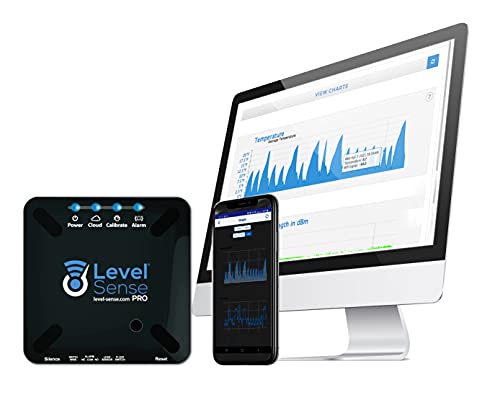
- Tracks water level, leaks, temperature, and humidity
- Remote Wi-Fi monitoring with power-failure alerts
- Self-recharging battery backup included
Best For: Connected basement and sump pump monitoring
Best for Simple Freeze Alerts

- Alerts for detected water and freezing temperatures
- Warns below 40°F to help protect pipes
- No separate base station required
Best For: Leak-prone areas where Amazon Sidewalk is available
Best for Large Homes
GoveeLife Smart Leak Detector 5-Pack

- Includes five sensors and a dedicated gateway
- Sends app, SMS, and email notifications
- Long-range connectivity and IP67 protection
Best For: Multi-area water monitoring across larger properties
Best for Flexible Placement

- Three moisture detectors for multiple locations
- Remote sensing discs reach up to 48 inches
- App notifications and limited lifetime warranty
Best For: Appliance and tight-space moisture monitoring
SmartThings Pick
Aeotec SmartThings Water Leak Sensor

- Monitors water leaks and temperatures from 32°F to 104°F
- Uses Zigbee with compatible SmartThings hubs
- Can automate water shutoff or electronics shutdown
Best For: SmartThings users wanting leak and temperature alerts
Whole-Home Alert Pick
X-Sense Wi-Fi Leak Detector Kit

- Includes three detectors and a base station
- Detects drips and pooling water as shallow as 0.4 mm
- Provides 120 dB alarms, app alerts, and 1,804-foot open-area range
Best For: Multi-room leak monitoring with loud alarms
Freeze-Warning Pick

- Combines leak detection with low-temperature freeze warnings
- Uses LoRa for up to 2,034 feet of open-air range
- Includes a 105 dB alarm and IP66 protection
Best For: Remote areas needing long-range leak and freeze alerts
Best Whole-Home Protection
Smart Water Monitor with Temperature Sensing
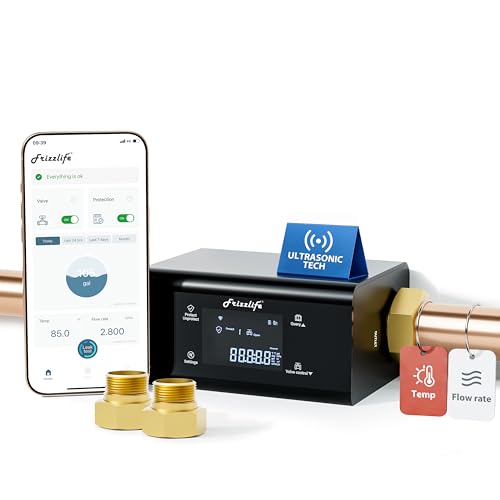
- Tracks flow rate and temperature in the app
- Detects flow changes down to 0.01 GPM
- Offers remote alerts and automatic shutoff
Best For: Homeowners seeking whole-home monitoring and valve control
Best Multi-Room Coverage

- Includes four sensors and a hub
- Built-in 105 dB alarms and freeze alerts
- LoRa range and up to five-year battery life
Best For: Monitoring multiple leak-prone areas around the home
Best Simple Standalone Alarm

- Uses multiple front and rear water probes
- Sounds a 100 dB local alarm
- IP66 housing and over two years of battery life
Best For: Local, no-hub protection in one leak-prone area
Best for Sump Pump Monitoring – Wi-Fi Sump Pump Alarm
If you need a water leak detector with temperature sensor capabilities for a basement or sump pump area, the Level Sense Pro combines water-level, leak, temperature, humidity, and power-failure monitoring. Its Wi-Fi connection and backup battery support remote status checks and alerts.
Best For: Homeowners who want detailed, connected monitoring for a sump pump, basement, or flood-prone area.
Pros:
- Monitors water levels, leaks, temperature, humidity, and power outages.
- Wi-Fi access enables remote checks and notifications through connected devices.
- Includes a self-recharging battery backup and a 2-year warranty.
Cons:
- Its floor-mounted design and sump-pump focus may be more than needed for a simple under-sink leak sensor.
- Requires AC power and Wi-Fi for its full feature set.
This is a feature-rich choice when you want more than a basic alarm. The combination of environmental readings, sump-pump monitoring, and backup power makes it particularly practical for basements where a small leak can become a major problem.
Best for Simple Freeze Alerts – Ring Flood & Freeze Sensor
The Ring Flood & Freeze Sensor is a straightforward water leak detector with temperature sensor functionality for common trouble spots. It sends alerts when water is detected and warns when temperatures fall below 40°F, helping you respond to leaks and potential frozen pipes.
Best For: Ring or Amazon Sidewalk users who want compact monitoring near sinks, water heaters, washing machines, and other risk areas.
Pros:
- Alerts you when it detects water.
- Provides early warnings when temperatures drop below 40°F.
- Does not require a separate base station and connects over Amazon Sidewalk.
Cons:
- Amazon Sidewalk is required, and coverage may vary.
- The supplied notes do not list humidity, power-outage, or remote probe features.
Choose this model if you prefer a simple, focused sensor for leak and freeze awareness. Its lack of a base station can simplify placement, but Sidewalk availability should be confirmed before purchase.
Best for Large Homes – GoveeLife Smart Leak Detector 5-Pack
For broad coverage, this GoveeLife kit pairs five sensors with a gateway and offers long-range connectivity. While it is not described as a temperature sensor, it provides water detection, app push notifications, SMS and email reminders, and a loud local alarm for multiple areas of the home.
Best For: Larger homes, basements, garages, and vacation properties that need several water sensors with long-range communication.
Pros:
- Five sensors and a gateway help cover multiple locations.
- Offers app, SMS, and email notifications plus a 105 dB alarm.
- Features up to 1804 feet of stated connectivity, IP67 protection, and a claimed 5-year battery life.
Cons:
- It does not provide a temperature-sensor feature in the supplied product notes.
- The gateway supports 2.4 GHz Wi-Fi and is compatible only with specified GoveeLife sensors.
- More setup is involved than with a standalone sensor.
This kit is a strong fit when sensor quantity and range matter more than temperature monitoring. Verify the gateway requirements and compatibility limits before installing it across separate buildings or distant areas.
Best for Flexible Placement – Moen Flo Detector 3-Pack
The Moen Flo Detector is a three-sensor water monitoring kit designed for areas such as basements, washing machines, and water heaters. It is not listed as a temperature sensor, but its remote sensing discs extend detection up to 48 inches, making it useful where the likely leak source is difficult to reach.
Best For: Homeowners who need several moisture sensors and flexible placement around appliances or tight spaces.
Pros:
- Three detectors support monitoring in multiple locations.
- Remote sensing discs extend detection up to 48 inches.
- App notifications provide real-time moisture alerts, with a limited lifetime warranty.
Cons:
- The supplied notes do not identify a temperature-sensing feature.
- Full whole-home integration with the Flo Smart Water Monitor and Shutoff requires that separate product.
- Battery-powered operation uses CR123A batteries.
This pack makes sense when placement flexibility is the priority, especially behind or beside appliances. If temperature readings are essential, consider a model explicitly advertised with a temperature sensor instead.
SmartThings Pick – Aeotec SmartThings Water Leak Sensor
Aeotec SmartThings SmartThings Water Leak Sensor, ZigBee, Battery Powered, Smart Home Hub Compatible
Check Price On AmazonIf you want a water leak detector with temperature sensor for a SmartThings setup, the Aeotec sensor combines moisture detection with temperature monitoring. Place it under sinks, refrigerators, washing machines, or other indoor trouble spots, then receive alerts through the SmartThings app when connected to a compatible hub.
Best For: SmartThings households that want leak alerts, temperature monitoring, and connected-device automation.
Pros:
- Detects excess water or moisture and monitors temperatures from 32°F to 104°F.
- Works with Aeotec Smart Home Hub, Samsung SmartThings Hub Gen 3, and other compatible Zigbee hubs.
- Can trigger connected devices to shut off water or power down electronics automatically.
Cons:
- Requires a compatible smart home hub.
- Intended for indoor use only.
- Temperature operating range is limited to 32°F–104°F.
This is a strong choice when temperature monitoring and SmartThings automation matter as much as leak detection. It is less suitable if you want a standalone sensor without a hub.
Whole-Home Alert Pick – X-Sense Wi-Fi Leak Detector Kit
The X-Sense kit is a practical water leak detector with temperature sensor alternative for shoppers prioritizing broad leak coverage and loud alerts. Three detectors use upper and lower probes to identify dripping or shallow pooling water, while the base and sensors can send app notifications over a 2.4 GHz Wi-Fi connection.
Best For: Larger homes that need multiple leak sensors, strong audible alerts, and long-range communication.
Pros:
- Six-probe detection senses dripping water and pooling as shallow as 0.4 mm.
- Water sensor and base station provide dual 120 dB alarms.
- Offers up to 1,804 feet of open-area wireless range and IP66-rated housings.
- Supports real-time phone alerts and access sharing with up to 12 users.
Cons:
- Requires a 2.4 GHz Wi-Fi network; 5 GHz Wi-Fi is not supported.
- The supplied notes do not specify temperature monitoring.
- The system requires setup through its app and base station.
Choose this kit for multi-location water protection and highly noticeable alarms. However, if temperature sensing is essential, verify the feature set carefully because the supplied specifications focus on water detection rather than temperature monitoring.
Freeze-Warning Pick – YoLink Water Leak Sensor 4
The YoLink Water Leak Sensor 4 fits shoppers seeking a water leak detector with temperature sensor functionality, especially for freeze-risk areas. Along with water detection, it provides low-temperature freeze warnings and communicates with a YoLink hub over long-range LoRa rather than connecting directly to Wi-Fi.
Best For: Basements, garages, outbuildings, and other areas where long range and freeze alerts are important.
Pros:
- Provides leak detection plus a built-in low-temperature freeze warning.
- Uses LoRa communication with an open-air range of up to 2,034 feet.
- Includes a 105 dB alarm, IP66 waterproof protection, and two replaceable AAA batteries.
- Supports app alerts and works with IFTTT when paired with the required hub.
Cons:
- A YoLink hub is required and is not included.
- Uses the YoLink ecosystem rather than direct Wi-Fi connectivity.
- The supplied details describe freeze warnings rather than a full temperature readout.
This is a compelling option for remote or hard-to-reach locations because its LoRa range exceeds typical Wi-Fi coverage. Its temperature feature is focused on warning about freezing conditions, so it may not suit buyers seeking continuous temperature readings.
Best Whole-Home Protection – Smart Water Monitor with Temperature Sensing
The Frizzlife LP365 is a whole-home water leak detector with temperature sensor capabilities, combining ultrasonic flow monitoring with app-based alerts and automatic shutoff. It tracks flow rate and temperature in real time and can detect changes as small as 0.01 GPM.
Best For: Homeowners who want remote monitoring, automatic shutoff, and water-usage insights for 3/4-inch or 1-inch plumbing.
Pros:
- Monitors flow rate and temperature through the Smart Life app.
- Ultrasonic detection can identify very small flow changes down to 0.01 GPM.
- Provides app, SMS, and phone-call alerts with automatic valve shutoff.
- Includes adapters for 3/4-inch and 1-inch pipe connections and has NSF/ANSI 61 and 372 certification.
Cons:
- Requires a corded electrical connection and must be plugged in for network access.
- Professional installation is recommended for plumbing connections.
- Outdoor installation may require extra protection from low temperatures.
Choose the LP365 if you want an integrated plumbing-control system rather than a standalone puddle alarm. Its temperature and flow readings, remote controls, and automatic shutoff provide broad coverage, though installation is more involved than placing a battery-powered sensor.
Best Multi-Room Coverage – YoLink 4-Pack Leak Sensors
The YoLink kit is a practical water leak detector with temperature sensor-related freeze alert coverage for multiple rooms, including four sensors and a hub. Each sensor has a built-in 105 dB alarm, while the LoRa connection supports long-range communication where Wi-Fi may be unreliable.
Best For: Households that need several battery-powered sensors across basements, utility areas, kitchens, or other leak-prone locations.
Pros:
- Includes one hub and four Leak Sensor 4 units for multi-area coverage.
- Built-in 105 dB alarms provide immediate local warnings.
- Supports app, email, and SMS/text alerts, with leak and freeze alerts listed in the product details.
- Long-range LoRa communication and up to five years of typical battery life reduce maintenance demands.
Cons:
- Requires the included hub for the complete connected setup.
- It detects leaks at sensor locations rather than automatically shutting off the home’s water supply.
- The advertised 2,034-foot range is specified for open-air conditions and may vary indoors.
This kit is a strong choice when broad room-by-room coverage matters more than whole-home flow monitoring. Its local sirens and long-range protocol add resilience, while the included hub enables app notifications and future expansion.
Best Simple Standalone Alarm – METAK Water Leak Detector
The METAK WD60 is a straightforward water leak detector with temperature sensor-style freeze-monitoring appeal for locations that need a local warning without an app or hub. Its multiple front and rear probes detect drips or pooled water and trigger a 100 dB alarm.
Best For: Renters and homeowners who want an inexpensive, wireless local alarm for sinks, basements, floors, or other damp areas.
Pros:
- Uses four rear probes and two front drip probes to detect water in several contact positions.
- Produces a loud 100 dB alarm with a mute function.
- IP66-rated housing is designed for use in high-humidity areas.
- Runs on two AAA batteries rated for over two years under normal usage and provides low-battery alerts.
Cons:
- Has no Wi-Fi or Bluetooth connectivity and does not send remote alerts.
- Does not connect to the METAK Wi-Fi gateway or the specified compatible product.
- Provides a local alarm only and does not automatically shut off water.
The WD60 prioritizes easy placement and loud local notification over smart-home features. It is a sensible choice for a single problem spot, but shoppers needing temperature readings, remote notifications, or automatic shutoff should consider a more connected system.
How We Picked the Best Water Leak Detector with Temperature Sensor
We compared these detectors by looking at the features that matter most during a real leak or freeze event: moisture detection, temperature monitoring, alarm volume, notification methods, power design, sensor placement, and smart-home compatibility. We also considered whether each product is best suited to one high-risk location, several rooms, or whole-home monitoring.
Connectivity is important, but it is not the only measure of usefulness. A loud local alarm can alert people at home when internet service is unavailable, while Wi-Fi, Zigbee, or low-power hub systems can provide remote notifications. Products with multiple sensors offer better coverage, and automatic shutoff systems can take action instead of only reporting a problem.
Quick Comparison
- Best for a single location: Choose a compact sensor for a water heater, washing machine, sink, or sump pump area.
- Best for multiple rooms: A multi-pack or kit with a dedicated hub can cover kitchens, bathrooms, basements, and utility spaces.
- Best for loud local alerts: Look for a high-decibel siren if you need to hear the alarm from another room.
- Best for remote monitoring: Wi-Fi or hub-connected models can send phone notifications while you are away.
- Best for active water management: A smart water monitor with an automatic shutoff valve can detect unusual flow and stop the supply.
Key Buying Factors for a Water Leak Detector with Temperature Sensor
Temperature Range and Freeze Alerts
Check whether the device reports actual temperature readings or only triggers a low-temperature warning. Freeze alerts are especially useful near exposed pipes, garages, crawl spaces, and unheated basements. Confirm the stated operating range and the temperature threshold before installation.
Alert Types and Connectivity
Decide whether you need a local siren, push notifications, email alerts, or integration with a broader smart-home platform. Wi-Fi models may connect directly to your router, while Zigbee and other low-power devices generally require a compatible hub. Hub-based systems can be efficient, but they add another component to configure.
Sensor Coverage and Placement
For a washing machine or water heater, one sensor may be enough. Larger homes benefit from several sensors placed near plumbing fixtures, sump pumps, refrigerators, and low points where water collects. Look for designs that detect moisture from the bottom, cable, or extended probe if the installation area is difficult to reach.
Power, Reliability, and Maintenance
Battery life, low-battery warnings, network reliability, and alarm performance all affect protection. Place sensors where you can test them and replace batteries easily. A detector is only useful if it remains powered, connected, and unobstructed.
Who Should Buy Which Water Leak Detector with Temperature Sensor?
Renters and budget-conscious shoppers should prioritize an easy-to-install standalone or direct-connect sensor with a loud alarm. Smart-home users should choose a model compatible with their existing hub or platform to avoid managing another ecosystem. Frequent travelers will benefit from reliable app notifications and multiple sensors covering the most vulnerable areas. Homeowners worried about frozen pipes should make temperature alerts a deciding feature, not an afterthought. Finally, whole-home protection seekers should consider a multi-sensor kit or an automatic shutoff system, while remembering that no device replaces routine plumbing inspections and appropriate insurance coverage.

