Wireless smoke detectors make it easier to connect alarms across bedrooms, hallways, and living spaces without running new wiring. The right system can give your household earlier, more coordinated alerts while reducing installation complexity.
This roundup compares 10 options ranging from basic battery alarms to interconnected smoke-and-CO systems, smart gateway kits, and long-life models. Use the guide below to match features, coverage, and maintenance needs to your home.
Best 10 Wireless Smoke Detectors Picks for 2026
Best Connected 2-in-1 Pick

- Smoke and CO detection in one alarm
- Wireless alarms sound together
- Sealed 10-year lithium batteries
Best For: Multi-room homes wanting coordinated smoke and CO alerts
Best Simple Single Alarm
First Alert SMI100 Battery Smoke Alarm

- Easy battery-powered installation
- Front-access 9V battery compartment
- Designed to reduce cooking nuisance alarms
Best For: Single-room smoke-only replacements
Best Whole-Home Coverage

- Six alarms for broad property coverage
- Links up to 18 alarms wirelessly
- Smoke and CO sensing with 10-year battery
Best For: Large or multi-story homes
Best Budget Multi-Pack

- Five photoelectric smoke alarms
- Test/mute button and low-battery warning
- Replaceable 9V batteries included
Best For: Multi-room smoke-only coverage
Smart Whole-Home Pick

- Six interconnected alarms plus gateway
- Optional app and email alerts
- 10-year battery and UL 217 10th Edition certification
Best For: Whole-home monitoring for homeowners, landlords, and contractors
Simple Maintenance-Free Choice

- Sealed 10-year lithium battery
- Photoelectric sensor for fewer nuisance alarms
- Standalone, no-wire installation
Best For: Homes and rentals needing basic low-maintenance coverage
Interconnected Value Pick

- All linked alarms sound together
- Dual-beam photoelectric detection
- No app or Wi-Fi required
Best For: Homes and apartments wanting coordinated local alerts
Best with Extra Features

- Interconnected alerts across multiple rooms
- Sealed battery lasts up to 10 years
- Photoelectric smoke-only detection
Best For: Larger homes needing coordinated smoke alerts
Best Smoke and CO Combo

- Detects smoke and carbon monoxide
- Interconnected alarms sound together
- Sealed battery lasts up to 10 years
Best For: Homes needing smoke and CO coverage without hardwiring
Best Compact Coverage Set
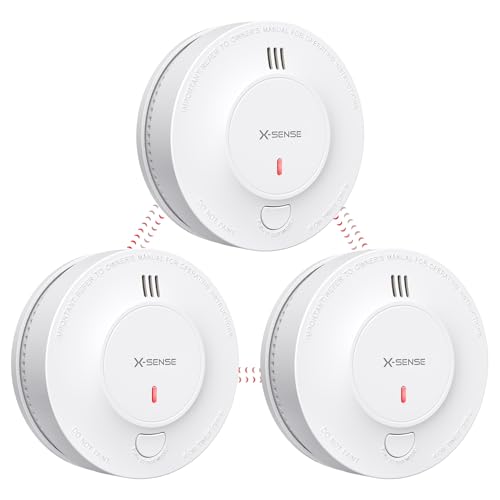
- Three interconnected photoelectric alarms
- Up to 10 years from the sealed battery
- Wireless, no-rewiring installation
Best For: Smaller homes and targeted room coverage
Best Connected 2-in-1 Pick – X-Sense XP0H-WN 3-Pack
The X-Sense XP0H-WN is a practical choice for shoppers seeking wireless smoke detectors with built-in carbon monoxide protection. Its three alarms can wirelessly interconnect so they sound together, while sealed lithium batteries provide up to 10 years of power without hardwiring or Wi-Fi.
Best For: Homes that want coordinated smoke and CO alerts across multiple rooms without replacing batteries frequently.
Pros:
- Combines photoelectric smoke and electrochemical CO detection in one alarm.
- Wireless interconnection makes all connected alarms sound when one detects danger.
- Sealed 10-year lithium batteries reduce routine battery changes.
- Large 5.7-inch mounting bracket can cover old screw holes and ceiling marks.
Cons:
- Supports wireless interconnection but does not provide Wi-Fi.
- Cannot be used with a base station.
- The oversized bracket may not suit every existing installation.
With three alarms, dual detection, and coordinated alerts, this set is well suited to straightforward whole-home safety coverage. Confirm the larger bracket fits your current mounting area before installing.
Best Simple Single Alarm – First Alert SMI100 Battery Smoke Alarm
The First Alert SMI100 is a straightforward battery-powered option for shoppers comparing wireless smoke detectors for a single room or replacement installation. Its Precision Detection technology is designed to reduce cooking nuisance alarms, and the front-access battery compartment simplifies maintenance.
Best For: Buyers who need one easy-to-install smoke alarm with accessible battery replacement and basic testing controls.
Pros:
- Battery operation supports easy installation without wiring.
- Front-access compartment makes battery replacement more convenient.
- Precision Detection technology is designed to reduce cooking nuisance alarms.
- Test/silence button and end-of-life warning support routine upkeep.
Cons:
- This is a single smoke alarm, not a multi-pack.
- It detects smoke only and does not include carbon monoxide sensing.
- Uses a replaceable 9V alkaline battery rather than a sealed 10-year battery.
This compact First Alert model focuses on simple installation and maintenance rather than interconnected coverage or combination detection. It is a sensible fit when you need a basic smoke-only replacement.
Best Whole-Home Coverage – X-Sense SC01-W 6-Pack
The X-Sense SC01-W is one of the more comprehensive wireless smoke detectors for larger homes. This six-pack combines smoke and CO sensing, links up to 18 alarms wirelessly, and offers a stated range of up to 820 feet for coverage across floors, basements, and detached garages.
Best For: Larger or multi-story homes that need coordinated alerts across many rooms and buildings.
Pros:
- Six-alarm package supports broad whole-home coverage.
- Wireless interconnection can link up to 18 alarms over up to 820 feet.
- Photoelectric smoke and electrochemical CO sensors provide dual protection.
- Sealed lithium battery is designed to last 10 years.
Cons:
- Wireless interconnection is not the same as Wi-Fi connectivity.
- A six-pack may be more than needed for a small home or single-room replacement.
- These alarms are battery-powered and not hardwired.
If you want coordinated warnings throughout a larger property, the SC01-W offers strong coverage potential without running alarm wiring. Its combination sensors also make it more versatile than smoke-only models.
Best Budget Multi-Pack – SITERWELL GS509A 5-Pack
The SITERWELL GS509A is a practical multi-pack for shoppers seeking wireless smoke detectors with replaceable batteries and photoelectric sensing. The five alarms are designed for wall or ceiling installation and include test/mute controls, low-battery warnings, and mounting hardware.
Best For: Homes that need several smoke-only alarms at a practical price and prefer replaceable batteries.
Pros:
- Five-pack helps equip multiple rooms.
- Photoelectric technology is designed to detect slow-smoldering fires.
- Test/mute button supports routine checks and temporary silencing.
- Includes mounting brackets, hardware, and a 9V battery for each alarm.
Cons:
- These are smoke-only alarms without carbon monoxide detection.
- They use replaceable 9V batteries, requiring ongoing replacements.
- The supplied notes do not indicate wireless interconnection between alarms.
This five-pack emphasizes broad smoke-only coverage and simple upkeep rather than connected alerts. It can work well for buyers who want photoelectric alarms in several rooms and are comfortable maintaining replaceable batteries.
Smart Whole-Home Pick – Heiman 6-Pack + Gateway
If you want wireless smoke detectors that can alert you throughout the home and provide remote notifications, this Heiman kit combines six interconnected alarms with a gateway. It supports local alarm communication without Wi-Fi, while the gateway adds app and email alerts over a 2.4GHz network.
Best For: Homeowners, landlords, and contractors seeking coordinated whole-home protection with optional smartphone monitoring.
Pros:
- Six alarms and one gateway provide broad coverage in a single package.
- Alarms can sound together locally, even without Wi-Fi.
- 10-year CR123A battery and dual-beam photoelectric sensing reduce maintenance and nuisance alarms.
- UL 217 10th Edition, CSFM, and FCC certifications are listed in the product notes.
Cons:
- Remote alerts require the included gateway and a 2.4GHz Wi-Fi connection.
- The system may offer more features than needed for a small home or standalone installation.
This is the most feature-rich option of the three, especially for multi-story homes or rental properties. Choose it if interconnected alarms and remote alerts matter more than keeping the setup simple.
Simple Maintenance-Free Choice – X-Sense 10-Year 5-Pack
These wireless smoke detectors are designed for straightforward, standalone protection without wiring, Wi-Fi, or an app. Each alarm uses a sealed 10-year lithium battery and photoelectric sensing, making the five-pack a practical fit for common rooms and rental properties.
Best For: Buyers who want easy-to-install, low-maintenance smoke alarms without wireless interconnection or smart features.
Pros:
- Sealed lithium batteries provide up to 10 years of power.
- Photoelectric sensing is designed to reduce nuisance alarms from cooking fumes and steam.
- Included mounting hardware and one-button testing or silencing simplify installation and use.
- ETL listed to meet the UL 217 safety standard.
Cons:
- Alarms operate independently and do not sound together.
- No Wi-Fi, app notifications, or base-station support are included.
The X-Sense is the clearest choice for uncomplicated coverage across bedrooms, hallways, and living areas. If you need interconnected alerts, consider a different model rather than assuming this five-pack communicates wirelessly.
Interconnected Value Pick – Heiman Wireless 5-Pack
For shoppers comparing wireless smoke detectors that sound together without relying on an app, this five-pack offers local wireless interconnection. When one alarm detects smoke, all linked units sound, while battery power and tool-free mounting keep installation relatively simple.
Best For: Homes and apartments that need coordinated alarms across multiple rooms but do not require smartphone alerts.
Pros:
- Wireless interconnection allows all linked alarms to sound when one detects smoke.
- Up to 656 feet of open-area range is listed for alarm-to-alarm communication.
- Dual-beam photoelectric sensing helps detect slow-smoldering smoke while limiting steam and cooking false alarms.
- UL 217 10th Edition certification, 85 dB alarm, and one-touch test/silence control are included features.
Cons:
- There is no direct app or Wi-Fi connection for smartphone notifications.
- The listed range applies to open areas and may vary inside a building.
This model sits between a basic standalone alarm and a smart gateway system. It is a strong fit when synchronized local alerts are important, but remote monitoring would add unnecessary complexity.
Best with Extra Features – X-Sense SD19-W 6-Pack
For shoppers comparing wireless smoke detectors, the X-Sense SD19-W 6-pack is designed to provide coordinated smoke alerts across bedrooms, hallways, living areas, and multiple floors. Its interconnected operation, sealed 10-year battery, and photoelectric sensor support straightforward, low-maintenance installation.
Best For: Larger homes that need interconnected smoke-only alarms across several rooms or floors.
Pros:
- When one alarm detects smoke, all interconnected alarms sound.
- Sealed lithium battery provides up to 10 years of power.
- Photoelectric sensing may help reduce alarms from everyday cooking fumes and steam.
- Supports up to 18 compatible X-Sense Link+ alarms and installs without wiring.
Cons:
- Detects smoke only and does not include carbon monoxide sensing.
- Optional remote control is not included.
This 6-pack is a practical choice when you want broad wireless coverage with minimal battery maintenance. Confirm that the compatible Link+ alarm ecosystem suits your installation before expanding the system.
Best Smoke and CO Combo – X-Sense SC06-W 6-Pack
The X-Sense SC06-W combines smoke and carbon monoxide detection in one wireless alarm, making it a versatile option among wireless smoke detectors. Its interconnected design sends an alert from one unit to all units, while the sealed battery avoids routine replacements for up to 10 years.
Best For: Homes wanting interconnected smoke and carbon monoxide protection without hardwiring or Wi-Fi.
Pros:
- Combines photoelectric smoke detection with electrochemical CO detection.
- All connected alarms sound when one unit detects danger.
- Sealed 10-year lithium battery reduces maintenance.
- Includes mounting hardware and a test/silence button for the system.
Cons:
- Does not support Wi-Fi or a base-station connection.
- Its combined function may be unnecessary if you only need smoke detection.
Choose this model when adding CO detection is as important as smoke coverage. It offers wireless interconnection and simple mounting, but shoppers seeking app or base-station features should look elsewhere.
Best Compact Coverage Set – X-Sense SD19-W 3-Pack
The X-Sense SD19-W 3-pack gives smaller homes or targeted areas the benefits of wireless smoke detectors without requiring a larger bundle. Each photoelectric alarm can connect with compatible units so an alarm in one location can alert the others, and the built-in battery is designed to last up to 10 years.
Best For: Apartments, smaller homes, or focused coverage in key rooms and hallways.
Pros:
- Interconnected alarms sound together when one detects smoke.
- Built-in battery provides up to 10 years of operation.
- Photoelectric sensing helps reduce unwanted alarms from cooking fumes and steam.
- Wireless installation requires no rewiring.
Cons:
- Smoke detection only; carbon monoxide detection is not included.
- Three alarms may provide less coverage than a larger multi-pack.
This 3-pack is a sensible middle ground for buyers who need coordinated smoke alerts but have fewer locations to cover. Its compatibility with additional Link+ alarms also allows the system to expand later.
How We Picked the Best Wireless Smoke Detectors
We focused on the features that matter most for dependable residential fire protection: wireless interconnection, smoke and carbon monoxide detection, battery life, certification information, package size, installation requirements, and ease of maintenance. We also considered whether each model is best suited to a small apartment, a larger home, a rental property, or a household that wants smart-home connectivity.
Product descriptions and specifications can vary by model and package, so verify the current listing for certification, included batteries, gateway requirements, and regional compliance before buying. Wireless alarms should supplement—not replace—your local fire-safety requirements and a complete home escape plan.
Quick Comparison
| Type | Best for | What to check |
|---|---|---|
| Smoke-only alarm | Basic room-by-room protection | Battery replacement and interconnection capability |
| Smoke and CO combo | One device for two common hazards | Sensor coverage, display or voice alerts, and placement guidance |
| Interconnected multi-pack | Whole-home alerting | Wireless range, maximum linked units, and setup procedure |
| Smart gateway system | Remote notifications and connected-home features | Gateway power, Wi-Fi compatibility, app support, and subscription terms |
Key Buying Factors for Wireless Smoke Detectors
Detection and Certification
Choose smoke-only alarms when you already have separate CO protection, or choose a combination unit for broader coverage with fewer devices. Look for clearly stated safety certifications, such as UL 217 for smoke alarms where applicable, and follow local regulations for placement and quantity.
Interconnection and Wireless Range
Interconnected alarms can sound together when one unit detects danger, which is especially useful in larger or multi-level homes. Confirm the compatible models, maximum number of linked alarms, range between devices, and whether walls or floors may reduce signal strength.
Battery Life and Maintenance
Ten-year battery models reduce routine replacements, but they still require regular testing and eventual replacement when the sealed battery reaches its service life. Replaceable-battery alarms may cost less initially and make battery changes easier. Test every alarm monthly, keep sensors free of dust, and follow the manufacturer’s replacement schedule.
Installation and Everyday Usability
Check mounting hardware, device size, test and silence controls, low-battery warnings, and whether the alarm provides voice or location alerts. Avoid installing alarms too close to kitchens, bathrooms, vents, or fans unless the manufacturer specifically recommends those locations.
Who Should Buy Which Wireless Smoke Detectors?
Choose a basic smoke-only model if you want affordable protection for a bedroom, hallway, rental, or small living space and already own CO alarms.
Choose a smoke-and-CO combination pack if you want broader hazard coverage with fewer devices, particularly near sleeping areas and on each floor.
Choose an interconnected multi-pack for a larger home, multiple floors, or anyone who wants an alarm in one area to alert occupants throughout the property.
Choose a smart gateway kit if remote notifications, app monitoring, or integration with a connected-home system are priorities. Make sure the gateway has reliable power and internet access.
Whichever system you choose, install the recommended number of alarms, keep them accessible for testing, and maintain a clear escape route from every sleeping area.

