When storms, outages, or remote trips disrupt normal communication, the right emergency radio can provide weather updates, light, alarms, and limited device charging in one compact tool.
We compared 10 emergency radios with flashlight across power options, radio coverage, battery capacity, lighting, charging features, and everyday portability to help you choose a dependable fit.
Best 10 Emergency Radios with Flashlight Picks for 2026
Best All-Around Pick
FosPower A1 NOAA Emergency Radio

- Solar, hand-crank, USB-C, and AAA power options
- NOAA access, SOS alarm, flashlight, and reading light
- 2000mAh power bank for phones and small tablets
Best For: Comprehensive outage and weather preparedness
Best for Outdoor Listening
QFX R-37 Solar Flashlight Radio

- Six-band AM/FM/shortwave reception
- Solar charging, rechargeable battery, and USB output
- Bluetooth, AUX, TF card, flashlight, and headphone jack
Best For: Camping, hiking, and portable entertainment
Best Simple Home Radio

- AM, FM, SW, and seven NOAA weather stations
- AC power or three D-cell battery operation
- Large controls and built-in flashlight
Best For: Home emergency kits and easy operation
Best Bluetooth Value
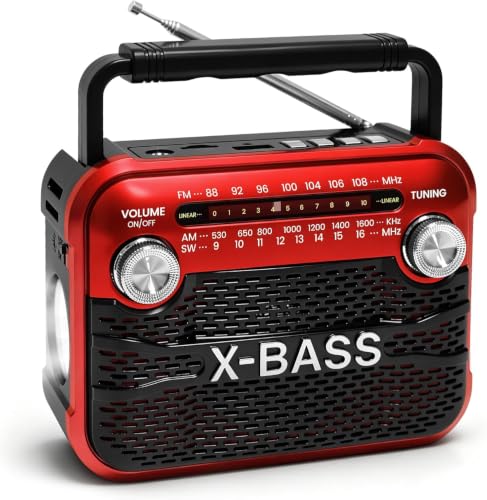
- Bluetooth 5.0 for wireless audio
- AM/FM/SW reception with extended antenna
- LED flashlight, USB charging, and D-battery support
Best For: Portable emergency use with everyday Bluetooth listening
High-Capacity Pick
Large-Panel 12000mAh Weather Radio

- Real 12000mAh battery for backup charging
- Large solar panel and efficient hand crank
- 5W flashlight plus 12-LED reading lamp
Best For: Home emergency kits and extended outages
Compact Value Pick

- Small design with built-in wristband
- Four charging methods, including AA batteries
- Flashlight, reading light, NOAA reception, and SOS
Best For: Travel, camping, and car emergency kits
Best All-Around Power Choice
Yoidesu Solar Hand Crank Emergency Radio

- Solar, hand-crank, and Type-C charging
- 2000mAh battery with status indicator
- AM/FM/WB radio, LED light, and SOS alarm
Best For: Camping and home emergency backup
Best Weather-Alert Features

- NOAA alerts plus AM/FM broadcasts
- 2000mAh battery with USB-C charging
- Multi-mode light, SOS beacon, and splash resistance
Best For: Storm preparedness and outdoor trips
Best All-Around Pick – FosPower A1 NOAA Emergency Radio
For shoppers comparing emergency radios with flashlight, the FosPower A1 stands out as a versatile preparedness tool. It combines NOAA, AM, and FM reception with solar and hand-crank charging, a 7400mWh power bank, a 1W flashlight, and a four-LED reading light.
Best For: Power outages, weather emergencies, and keeping a phone or small tablet charged.
Pros:
- Offers solar, hand-crank, USB-C, and AAA-battery power options.
- Includes NOAA weather access, an SOS alarm, a flashlight, and a reading light.
- Its 2000mAh power bank can provide emergency power to small tablets or phones.
- Includes a limited lifetime warranty.
Cons:
- Requires four AAA batteries, which are not described as included.
- Its 14.8-ounce size is less pocket-friendly than smaller radios.
This is the strongest choice when you want one compact device to cover weather alerts, emergency lighting, backup charging, and multiple power options.
Best for Outdoor Listening – QFX R-37 Solar Flashlight Radio
QFX R-37 6-Band (AM, FM, SW1 - SW4) Bluetooth LED Flashlight Solar Radio (2021 Model)
Check Price On AmazonThe QFX R-37 is a lightweight option for anyone seeking emergency radios with flashlight functionality plus recreational audio features. Its solar-rechargeable design, removable lithium-ion battery, six-band tuning, Bluetooth, and carrying strap make it suited to travel and outdoor use.
Best For: Camping, hiking, backpacking, and portable music listening.
Pros:
- Receives AM, FM, and four shortwave bands.
- Includes a solar panel, rechargeable battery, and 5V USB charging port.
- Built-in LED flashlight and carrying strap support outdoor portability.
- Supports Bluetooth, auxiliary input, TF card playback, and headphones.
Cons:
- The supplied notes do not mention NOAA-specific weather alerts.
- At 16 ounces, it is somewhat heavier than the advertised under-one-pound description suggests.
Choose this model if entertainment and portability matter as much as basic emergency utility, particularly when you want Bluetooth playback alongside radio reception.
Best Simple Home Radio – PRUNUS J15WB NOAA Radio
For a straightforward household option among emergency radios with flashlight, the PRUNUS J15WB emphasizes easy controls and strong reception. It receives AM, FM, shortwave, and seven NOAA weather stations, while its flashlight and AC-or-battery operation provide practical outage support.
Best For: Home use, older adults, and anyone who prefers large, manual controls.
Pros:
- Accesses AM, FM, SW, and seven NOAA weather stations.
- Uses either AC power or three D-cell batteries.
- Features a 31-inch telescopic antenna and DSP chip for station reception.
- Has a large dial, simple knobs, handle, flashlight, and earphone jack.
Cons:
- D-cell batteries are not included.
- It does not offer solar, hand-crank, or USB charging in the supplied details.
- Its larger 9.33-by-6.22-inch design is less convenient for packing.
This is a sensible pick for a bedside or kitchen emergency kit when dependable AC operation, traditional controls, and NOAA access are more important than compact size.
Best Bluetooth Value – AM/FM/SW Emergency Radio
This compact model combines emergency lighting and radio coverage with modern wireless playback. It supports AM, FM, and SW reception, Bluetooth 5.0, USB charging, D-battery operation, a foldable handle, and a built-in high-brightness LED flashlight.
Best For: Users who want an emergency radio that also works as a portable Bluetooth speaker.
Pros:
- Supports AM, FM, and shortwave bands with an extended antenna.
- Offers Bluetooth 5.0 plus USB charging and D-battery operation.
- Includes a bright LED flashlight and foldable carrying handle.
- Provides a 3.5mm headphone jack and simple knobs and buttons.
Cons:
- The supplied notes do not mention NOAA-specific weather station access.
- No solar or hand-crank charging is listed.
- The exact battery type is described as nonstandard, so replacement planning may require care.
This radio is a good fit for buyers prioritizing Bluetooth convenience and everyday portability while still wanting backup lighting and multi-band reception.
High-Capacity Pick – Large-Panel 12000mAh Weather Radio
If you want emergency radios with flashlight capability for extended outages, this model stands out with its stated 12000mAh battery, large monocrystalline solar panel, and dual-light setup. It also combines AM/FM and NOAA reception with multiple charging options.
Best For: Home emergency kits, blackouts, storm preparation, and outdoor use when backup power matters.
Pros:
- Real 12000mAh battery supports phone charging and emergency lighting.
- Large 8500mm² solar panel and reinforced hand crank provide backup charging options.
- Includes a 5W adjustable-beam flashlight and 12-LED reading lamp.
- IPX6 waterproof design, NOAA alerts, and SOS alarm add preparedness features.
Cons:
- At about 824 g, it is heavier than more basic portable radios.
- The larger battery and rugged design may be more than casual users need.
This is the most power-focused option in the group. Its combination of battery capacity, lighting, weather alerts, and water resistance makes it a strong all-around choice for serious preparedness.
Compact Value Pick – Portable 2500mAh NOAA Radio
This compact option is a practical choice among emergency radios with flashlight features, pairing a 2500mAh battery with solar, hand-crank, Micro USB, and AA-battery power options. Its NOAA, AM, and FM coverage helps keep basic news and weather information available during outages.
Best For: Car glove boxes, camping packs, travel, and smaller emergency kits that prioritize portability.
Pros:
- Compact design with a built-in wristband for carrying.
- Offers four charging methods, including solar, hand crank, Micro USB, and three AA batteries.
- Includes a 1W flashlight, 2W reading light, USB phone output, and SOS alarm.
- Receives all seven listed NOAA weather frequencies plus AM and FM.
Cons:
- The 2500mAh battery is substantially smaller than the high-capacity model in this roundup.
- Phone charging is described as emergency top-up power rather than a full recharge solution.
- The supplied specifications are inconsistent about tuner and connectivity details.
Its lightweight format and flexible power options make it easy to keep nearby. Choose it when portability and basic emergency functions are more important than maximum battery capacity.
Simple Backup Pick – Classic 2000mAh Crank Radio
For shoppers seeking straightforward emergency radios with flashlight and charging functions, this classic crank model provides a 2000mAh power bank, AM/FM reception, and three stated power sources. Its separate flashlight and reading light cover basic visibility needs during an outage.
Best For: Budget-conscious emergency kits, power outages, and users who want simple manual backup charging.
Pros:
- 2000mAh power bank can provide emergency power for a phone or small tablet.
- Uses hand crank, solar panel, and AAA batteries as power sources.
- Provides both a flashlight and four-LED reading light.
- Loud SOS alarm supports emergency signaling.
Cons:
- Its battery capacity is lower than the 2500mAh and 12000mAh options here.
- The supplied details identify AM/FM reception but do not specify NOAA band support.
- Lighting and charging features are more basic than those on the larger high-capacity model.
This radio focuses on essential functions rather than extra features. It is a sensible backup when you want manual charging, basic lighting, AM/FM broadcasts, and an SOS alarm in one device.
Best All-Around Power Choice – Yoidesu Solar Hand Crank Emergency Radio
For shoppers comparing emergency radios with flashlight, this Yoidesu model combines three charging options, a 2000mAh battery, AM/FM/WB reception, and an SOS alarm in a compact orange design. Its battery indicator and carrying strap add practical convenience for preparedness kits, camping, and everyday backup use.
Best For: Campers and households wanting versatile charging plus weather-band reception.
Pros:
- Supports solar, hand-crank, and USB Type-C charging.
- 2000mAh battery includes a visible battery and charging-status indicator.
- Receives AM, FM, and WB broadcasts and includes LED lighting and an SOS alarm.
- Lightweight body and carrying strap support portable use.
Cons:
- The supplied details describe the LED as soft auxiliary lighting rather than a high-output beam.
- Listed specifications identify a one-band radio detail, so buyers should verify band information before purchase.
This is a feature-rich choice for users who value multiple ways to restore power and want weather-band access in a portable emergency radio with flashlight. The battery indicator is especially useful when preparing for extended outdoor use or an outage.
Best Simple Backup Radio – Portable Hand Crank Weather Radio
This portable emergency radio with flashlight focuses on straightforward operation and core preparedness features. It offers hand-crank, solar, and USB charging, AM/FM/SW reception, an LED flashlight, an SOS alarm, and USB phone charging in a compact hard-plastic shell.
Best For: Buyers seeking a simple, budget-minded radio for outages, camping, and emergency storage.
Pros:
- Provides hand-crank, solar, and USB charging options.
- Includes AM/FM/SW reception, LED flashlight, and SOS alarm.
- USB phone charging adds a useful emergency-power function.
- Hard plastic casing is designed to withstand minor bumps.
Cons:
- The supplied notes do not specify the battery capacity.
- No battery-level indicator is listed in the provided specifications.
- Its compact plastic construction is described as resisting minor bumps, not heavy-duty impact.
With clear tuning controls and an integrated design, this model is suited to shoppers who prefer essential functions without a complicated setup. It is a practical option for keeping in a home emergency kit, vehicle, or camping pack.
Best Weather-Alert Features – LiebeWH NOAA Hand Crank Radio
For emergency radios with flashlight that prioritize severe-weather awareness, the LiebeWH combines NOAA alerts with AM/FM broadcasts, a 2000mAh battery, and three charging methods. Its multi-mode LED light, SOS beacon, and splash-resistant enclosure make it suitable for emergency kits and outdoor conditions.
Best For: Storm preparedness and outdoor users who want weather alerts with phone-charging capability.
Pros:
- Provides NOAA weather alerts for storm information.
- Supports hand-crank, solar, and USB-C charging.
- 2000mAh battery can charge devices, including a phone.
- Multi-mode LED light, flashing SOS beacon, and splash-resistant enclosure improve emergency versatility.
Cons:
- The supplied specifications list radio bands as 520–1710 kHz rather than clearly detailing separate AM/FM/WB tuning.
- Water protection is described as resistance to splashes, not full waterproofing.
- The notes do not provide a specific runtime or charge-time rating.
This model stands out for its explicit NOAA-alert focus and 2000mAh power bank. It is a strong fit for storm-readiness kits, though buyers needing documented waterproofing or detailed runtime figures should review the listing carefully.
How We Picked These Emergency Radios with Flashlight
We focused on features that matter during outages and emergencies rather than treating every specification as equally important. The comparison considers NOAA weather access, AM/FM and shortwave coverage, charging methods, internal battery capacity, flashlight and reading-light design, SOS functions, phone-charging capability, and portability.
Because product listings can vary by seller and model year, confirm the current specifications before buying—especially battery capacity, charging ports, included cables, and whether weather alerts are automatic or require manual tuning. A radio is most useful when it remains charged, easy to operate, and stored somewhere accessible.
Quick Comparison
| Feature | Why It Matters |
|---|---|
| NOAA weather band | Provides access to weather forecasts and emergency broadcasts in supported areas. |
| AM/FM/shortwave | Expands listening options when local stations or internet service are unavailable. |
| Solar and hand-crank charging | Offers backup power when outlets and disposable batteries are not practical. |
| USB or USB-C output | May provide emergency power for a phone or other small device. |
| Flashlight and reading light | Supports navigation, repairs, reading, and shelter lighting during a blackout. |
| SOS alarm | Can attract attention, but should not replace a dedicated emergency beacon. |
Key Buying Factors for Emergency Radios with Flashlight
Power and Battery Capacity
Look for more than one charging method. Solar charging is useful for extended outages, while hand cranking is dependable when sunlight is limited. Larger stated capacities can support longer radio or lighting use, but real-world runtime depends on volume, brightness, battery age, and charging efficiency.
Radio Coverage and Controls
NOAA compatibility is especially valuable in the United States, but reception quality also depends on antenna design, location, and local signal strength. Choose clearly labeled controls and a readable tuning display if several household members may need to use it.
Lighting and Charging Practicality
A focused flashlight helps with walking and searching, while a separate reading light is better for maps or documents. If phone charging is important, check the output type and understand that emergency radios generally provide limited power rather than a full, fast recharge.
Size and Durability
Compact models suit go-bags and camping, while larger radios may offer bigger panels, stronger lights, or higher-capacity batteries. Favor a design that is easy to grip and store, with protected ports and controls that are unlikely to activate accidentally.
Who Should Buy Which Emergency Radios with Flashlight?
Choose a higher-capacity model with a large solar panel if you are building a home emergency kit or preparing for long outages. A compact hand-crank and solar radio is better for hiking, camping, evacuation bags, and car storage. Models with AM/FM, shortwave, and Bluetooth suit buyers who want broader entertainment and listening flexibility, while a straightforward NOAA/AM/FM unit is often easier for occasional household use.
For the best overall preparedness, keep spare batteries where supported, test the radio every few months, learn the tuning and alert controls, and store it with a charging cable and basic emergency supplies.

