When severe weather or a power outage cuts off your usual devices, a reliable emergency radio can provide critical alerts, lighting, and limited phone charging. Solar charging adds a renewable backup, while hand cranks and replaceable batteries can keep the radio useful when sunlight is limited.
We selected 10 emergency radios with solar charging across compact, high-capacity, and feature-rich designs. Use the guide below to compare charging methods, alert coverage, battery capacity, durability, and the features that matter most for your emergency kit.
Best 10 Emergency Radios with Solar Charging Picks for 2026
Best All-Around Backup
FosPower A1 Solar Hand-Crank Radio

- 2000mAh power bank for phones or small tablets
- Solar, hand-crank, USB-C, and AAA power options
- NOAA radio, SOS alarm, flashlight, and reading light
Best For: Home emergency kits and power outages
Best for Simple Everyday Listening
PRUNUS J08 Solar Portable Radio

- Large tuning controls designed for easy operation
- Up to 9 hours of playback per charge
- Strong AM/FM reception and 5W speaker
Best For: Seniors and casual home or outdoor listening
Best for Off-Grid Adventures
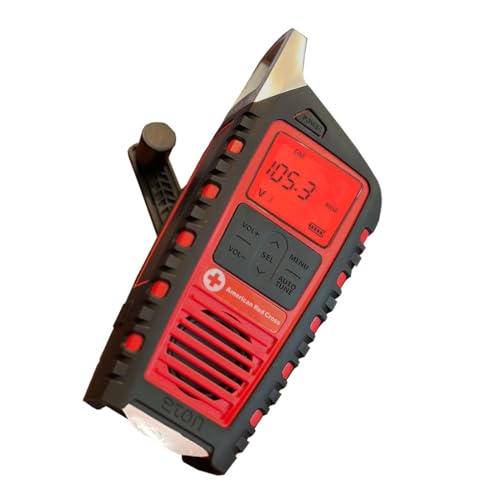
- AM/FM, shortwave, and NOAA reception with alerts
- Solar, hand-crank, and 2000mAh rechargeable power
- Bluetooth, flashlight, SOS alarm, and phone charger
Best For: Camping, hiking, and versatile emergency kits
Best High-Capacity Power Backup
Roxicosly CR1030 Weather Radio

- Stated 12000mAh battery for USB device charging
- Large solar panel plus hand crank and other power options
- IPX6 waterproofing, NOAA alerts, and dual emergency lights
Best For: Extended outages and severe-weather preparedness
Compact All-Band Backup
EM06 Emergency Solar Hand Crank Radio

- AM/FM/shortwave reception
- Solar, crank, and battery power
- 120-lumen light with SOS alarm
Best For: Go-bags and car emergency kits needing shortwave coverage
Weather-Alert Powerhouse
FTVOGUE Solar Hand Crank Emergency Radio

- NOAA, AM, and FM reception
- Four stated power methods
- Flashlight and reading light
Best For: Family emergency kits and camping with weather alerts
Compact Power Ready

- Solar, hand-crank, and USB-C charging
- 2,000mAh battery with power indicator
- AM/FM/weather band, light, and SOS alarm
Best For: Portable emergency kits and outdoor use
Weather Alert Defender

- NOAA alerts and AM/FM broadcasts
- 2,000mAh battery with solar, crank, and USB-C charging
- Multi-mode light, SOS beacon, and splash protection
Best For: Storm preparation and outdoor emergency kits
Best All-Around Backup – FosPower A1 Solar Hand-Crank Radio
For shoppers comparing emergency radios with solar charging, the FosPower A1 offers a versatile balance of weather updates, backup power, and lighting. Its solar panel and hand crank help maintain essential functions, while AAA batteries provide another option when manual or solar charging is impractical.
Best For: Home emergency kits and power outages where phone charging, weather broadcasts, and lighting are all important.
Pros:
- 7400mWh (2000mAh) power bank can provide emergency power to a phone or small tablet.
- Supports solar, hand-crank, USB-C, and AAA-battery power options.
- Includes NOAA, AM, and FM reception, an SOS alarm, a 1W flashlight, and a four-LED reading light.
- Water-resistant design and limited lifetime warranty add preparedness value.
Cons:
- The power bank capacity is more modest than the 12000mAh model in this roundup.
- It requires four AAA batteries, which must be supplied separately.
The FosPower is a practical, feature-rich choice for general preparedness. Choose it when you want one compact device to cover communications, basic lighting, and emergency phone power.
Best for Simple Everyday Listening – PRUNUS J08 Solar Portable Radio
The PRUNUS J08 is a straightforward option among emergency radios with solar charging, emphasizing easy controls, strong reception, and everyday portability. Its rechargeable battery handles regular listening, while the solar panel provides a backup power source during outages.
Best For: Seniors, families, and casual users who want an easy-to-operate radio for home, walks, camping, or power interruptions.
Pros:
- Large frequency scale and oversized tuning knob are designed for simple operation.
- Rechargeable battery provides up to nine hours of continuous playback on a full charge.
- 18.5-inch rotatable antenna and DSP chip support clear AM/FM reception.
- Three-inch, 5W speaker delivers room-filling sound, with a 3.5mm headphone jack for private listening.
Cons:
- The supplied notes do not indicate NOAA weather-band reception or an SOS alarm.
- Its solar panel is described as an emergency power source rather than a full-featured charging system.
- The radio does not list a phone-charging power bank.
This PRUNUS model is better suited to accessible radio listening than comprehensive disaster preparedness. Its large controls and loud speaker make it appealing when ease of use matters most.
Best for Off-Grid Adventures – Eton Odyssey Adventure Radio
The Eton Odyssey Adventure combines solar charging and hand-crank power with broad broadcast coverage, Bluetooth, and a phone-charging output. For anyone seeking emergency radios with solar charging for camping or storm preparation, its ruggedized IPX4 design and compact format add useful outdoor flexibility.
Best For: Camping, hiking, and emergency kits that benefit from shortwave reception, Bluetooth playback, and durable construction.
Pros:
- Receives AM, FM, shortwave, and NOAA weather bands with RDS and visual/audio alerts.
- Uses solar charging, hand crank, and a rechargeable 2000mAh battery.
- Features a multi-setting LED flashlight, SOS alarm, clock, LCD display, and USB phone charger.
- Bluetooth connectivity supports streaming from a smartphone or MP3 player.
Cons:
- The 2000mAh battery offers less stated capacity than the largest model in this roundup.
- Its IPX4 rating is water resistant, but less protective than an IPX6 waterproof design.
- At 1.2 pounds, it is not the lightest option listed.
The Odyssey is a strong fit when entertainment and information access matter alongside emergency features. Its shortwave support and outdoor-oriented construction make it especially versatile away from home.
Best High-Capacity Power Backup – Roxicosly CR1030 Weather Radio
With a stated real 12000mAh battery and a large monocrystalline solar panel, the Roxicosly CR1030 is the power-focused pick among emergency radios with solar charging. It also combines NOAA alerts, multiple lighting modes, and a fast hand-crank generator for blackout and storm preparedness.
Best For: Households preparing for extended outages, severe weather, and outdoor conditions where extra phone-charging capacity is useful.
Pros:
- Stated 12000mAh battery provides substantial backup power for phones and other USB devices.
- Large 8500mm² monocrystalline solar panel is designed for more efficient sunlight capture.
- Includes AM/FM and seven NOAA bands with automatic alerts and a 9-second alarm.
- IPX6 waterproofing, a 5W adjustable flashlight, and a 12-LED reading lamp support outdoor and blackout use.
Cons:
- The 824g weight is heavier than several compact radios in the roundup.
- Its larger battery and feature set may be more than needed for simple everyday radio listening.
The CR1030 stands out when backup energy is the priority. Its combination of high stated capacity, solar charging, crank power, waterproofing, and lighting makes it a compelling severe-weather option.
Compact All-Band Backup – EM06 Emergency Solar Hand Crank Radio
For shoppers comparing emergency radios with solar charging, the EM06 offers several backup options in a compact format. It receives AM, FM, and shortwave broadcasts, and combines solar and hand-crank power with a rechargeable battery.
Best For: Go-bags, car kits, and power-outage preparedness when shortwave reception and phone charging are useful.
Pros:
- Supports AM, FM, and shortwave broadcasts from 5.6–22 MHz.
- Provides hand-crank, solar, and battery power options.
- Includes a 120-lumen flashlight, SOS alarm, and flashing signal light.
- USB-A output can provide a phone emergency boost.
Cons:
- Does not include a NOAA weather band.
- Its 2,000mAh phone-charging capacity is intended for a vital boost rather than extended charging.
The EM06 is a practical choice if you want broad broadcast coverage and multiple emergency features in a lightweight unit. Buyers who prioritize NOAA alerts should consider a different model.
Weather-Alert Powerhouse – FTVOGUE Solar Hand Crank Emergency Radio
The FTVOGUE is one of the more feature-packed emergency radios with solar charging, pairing NOAA weather reception with four stated power methods. Its lights, SOS alarm, and phone-charging output make it suited to outages as well as outdoor use.
Best For: Families, campers, and preparedness kits where NOAA weather updates, multiple charging choices, and separate lighting are priorities.
Pros:
- Receives all seven NOAA weather frequencies along with AM and FM.
- Offers solar, hand-crank, Micro USB, and 3-AA-battery power options.
- Includes a 1-watt flashlight and 2-watt reading light.
- USB output can charge a phone approximately 20–50% in a pinch, according to the supplied notes.
Cons:
- The listing information is inconsistent about the radio tuner and bands, so verify specifications before buying.
- Solar charging and hand-crank performance depend on conditions and usage.
- The stated warranty is limited to 90 days.
With NOAA coverage and dedicated reading illumination, this model has a strong emergency-preparedness feature set. Its specification inconsistencies make checking the current product listing especially important.
Simple Splash-Resistant Backup – Wind Up Solar NOAA Emergency Radio
This compact model keeps the essentials straightforward for shoppers seeking emergency radios with solar charging. It combines solar, hand-crank, and Type-C charging with AM, FM, and NOAA weather reception, plus a small torch and SOS alarm.
Best For: Basic emergency kits, car storage, and camping bags that need a compact radio-light combination.
Pros:
- Includes AM, FM, and NOAA weather-band reception.
- Charges through solar power, hand crank, or Type-C cable.
- Features a 3-LED torch and SOS alarm.
- IPX3 splash resistance helps with light spray and splashes.
Cons:
- IPX3 protection does not cover submersion.
- Solar charging is slow and depends on sunlight.
- The supplied details describe a mono speaker and do not mention phone-charging output.
The Ywalxskk radio is a sensible minimalist option when NOAA access, basic lighting, and compact storage matter more than advanced charging features. Its splash resistance is useful, but it should not be treated as waterproof.
Compact Power Ready – 3-Way Solar Hand Crank Radio
For shoppers comparing emergency radios with solar charging, this Yoidesu model combines solar, hand-crank, and USB-C charging in a compact package. Its 2,000mAh battery, AM/FM/weather-band reception, battery indicator, flashlight, and SOS alarm cover core preparedness needs.
Best For: Home emergency kits, camping, hiking, and users who want USB-C charging with clear power-status information.
Pros:
- Supports solar, hand-crank, and USB-C charging.
- Built-in 2,000mAh battery provides portable backup power.
- Receives AM, FM, and weather-band broadcasts.
- Includes LED lighting, SOS alarm, carrying strap, and battery indicator.
Cons:
- The supplied details do not specify phone-charging capability.
- Its listed warranty is 90 days.
Choose this radio if flexible charging and straightforward power monitoring matter most. The lightweight design also makes it easy to keep in an emergency bin or carry outdoors.
Simple Storm Backup – Portable Hand Crank Weather Radio
This portable model is a practical choice for shoppers seeking emergency radios with solar charging at home or outdoors. It supports solar, hand-crank, and USB charging, while its AM/FM/SW reception, flashlight, SOS alarm, and USB phone-charging feature address basic outage and preparedness needs.
Best For: Blackout preparation, storm kits, camping, hiking, and buyers who prefer simple controls and a durable plastic shell.
Pros:
- Offers hand-crank, solar, and USB charging options.
- Supports AM, FM, and shortwave reception.
- Combines radio, LED flashlight, SOS alarm, and USB phone charging.
- Compact hard-plastic enclosure is designed to resist minor bumps.
Cons:
- The supplied specifications do not list a battery capacity.
- Brand and model information are generic in the listing.
This is a sensible basic emergency radio for households and travel. Its broad charging and radio-band support is useful, though buyers wanting a stated battery capacity may prefer a more fully documented model.
Weather Alert Defender – 2,000mAh Solar Crank Radio
For emergency radios with solar charging that emphasize weather awareness, the LiebeWH combines solar, hand-crank, and USB-C charging with a 2,000mAh battery. NOAA alerts, AM/FM broadcasts, a multi-mode light, SOS beacon, and splash-resistant enclosure make it suited to preparedness and outdoor use.
Best For: Storm readiness, emergency kits, camping, hiking, and users who want NOAA alerts plus phone-charging support.
Pros:
- Supports solar, hand-crank, and USB-C charging.
- Includes a 2,000mAh battery for device charging.
- Provides NOAA alerts and AM/FM broadcasts.
- Has a multi-mode LED light, SOS beacon, loud alarm, and splash-resistant enclosure.
Cons:
- The listed radio-band specification is presented as 520–1710 kHz rather than clearly detailing all supported bands.
- Its supplied warranty information lists 90 days.
This model stands out when severe-weather information is a priority. Its combination of NOAA alerts, multiple charging methods, and splash protection gives it a strong role in storm kits and outdoor emergency gear.
How We Picked the Best Emergency Radios with Solar Charging
We focused on radios that combine solar charging with at least one dependable backup method, such as a hand crank, USB input, or replaceable batteries. We also considered NOAA weather coverage, AM/FM reception, shortwave availability, battery capacity, charging outputs, lighting, SOS functions, portability, and the practicality of each design for outages, camping, hiking, and storm preparation.
Because product specifications can vary by listing and production revision, verify the current battery size, included cables, radio bands, weather-alert behavior, and water-resistance rating before buying.
Quick Comparison
| Priority | Look For | Best Fit |
|---|---|---|
| Weather awareness | NOAA or weather-band reception and alert support | Storm-prone homes and emergency kits |
| Longer runtime | Higher-capacity rechargeable battery | Extended outages and frequent outdoor use |
| Maximum backup flexibility | Solar, hand crank, USB, and battery charging | Unpredictable emergencies |
| Portability | Compact body, integrated flashlight, and simple controls | Camping, hiking, and vehicle kits |
Key Buying Factors for Emergency Radios with Solar Charging
Charging Options and Battery Capacity
Solar panels are best viewed as a maintenance or emergency charging method rather than a fast primary charger. A hand crank is more dependable at night or during cloudy conditions, while USB charging is convenient before an outage. Compare the rechargeable battery rating, usually listed in mAh or Wh, but remember that actual runtime depends on volume, lighting, phone charging, and signal conditions.
Radio Coverage and Alerts
NOAA weather-band reception is especially valuable in the United States, but not every radio automatically monitors alerts. If you need warnings while sleeping or away from the radio, confirm that the model supports an alert mode rather than only manual tuning. AM/FM is useful for local updates, while shortwave can broaden listening options but may require more careful antenna positioning.
Emergency Features and Build
Look for a bright flashlight, reading light, SOS alarm, clear tuning controls, and a visible battery indicator. For outdoor use, check whether the enclosure is water-resistant and whether ports have protective covers. A USB output can charge a phone in an emergency, but it may consume most of the radio’s stored energy, so treat it as a limited backup rather than a power bank replacement.
Who Should Buy Which Emergency Radios with Solar Charging?
Choose a higher-capacity model if you are preparing for multi-day outages or want more phone-charging reserve. A compact AM/FM/NOAA model is usually better for a go-bag, car kit, or occasional camping. Buyers who want the greatest resilience should prioritize four charging methods, especially solar, hand crank, USB, and replaceable batteries. If information gathering is your main concern, favor clear NOAA support and alert functionality over extra lights or decorative features. For frequent outdoor use, prioritize low weight, weather resistance, a strong flashlight, and controls that are easy to operate in the dark.

